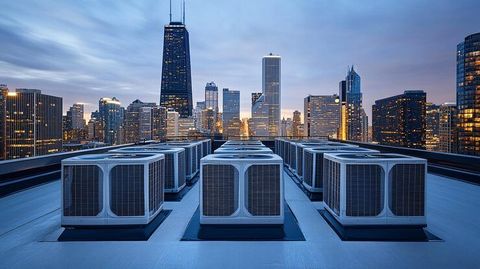
Commercial HVAC Innovations: Insights Into Smart Controls and Energy Management
Commercial heating, ventilation, and air conditioning (HVAC) systems are essential components of modern buildings. They regulate indoor temperatures, manage humidity, circulate fresh air, and maintain comfortable environments for people working, studying, shopping, or visiting public facilities. These systems are commonly installed in offices, hospitals, educational institutions, shopping centres, hotels, industrial facilities, and large commercial complexes.
Traditional HVAC equipment generally operates through fixed schedules, manual adjustments, and basic temperature controls. Although these methods provide essential climate management, they may not respond efficiently to changing occupancy levels, outdoor temperatures, or variations in indoor air quality.
Next-generation commercial HVAC systems introduce advanced technologies that improve how buildings manage heating, cooling, and ventilation. They combine energy-efficient equipment with smart sensors, automated controls, connected monitoring platforms, and data-driven building management systems.
Some important technologies include:
Variable Refrigerant Flow (VRF): Adjusts refrigerant circulation according to the heating or cooling requirements of different indoor zones.
Variable Speed Drives (VSDs): Regulate motor speeds in fans, pumps, and compressors according to actual demand.
Smart Thermostats: Automatically adjust temperature settings using schedules, occupancy information, and environmental conditions.
Building Automation Systems (BAS): Coordinate HVAC equipment with other building technologies through a centralised platform.
Advanced Heat Pumps: Transfer heat efficiently for indoor heating and cooling.
Internet of Things (IoT) Sensors: Collect information about temperature, humidity, occupancy, and indoor air quality.
These technologies represent a shift towards intelligent building climate management, where equipment responds to real operating conditions instead of following fixed operating patterns.
Why Energy Efficiency and Smart HVAC Controls Matter
Energy efficiency has become an important consideration in commercial building management. Heating and cooling requirements can account for a substantial share of a building's electricity consumption, particularly in regions with high temperatures or demanding indoor environmental requirements.
Next-generation HVAC systems help building owners and facility managers understand energy consumption and identify opportunities to improve equipment performance.
Reducing Unnecessary Energy Consumption
Traditional HVAC equipment may continue operating at similar output levels even when fewer people occupy a building. Smart HVAC controls can respond to occupancy information and adjust heating, cooling, and ventilation accordingly.
For example, an office with several unoccupied meeting rooms can reduce cooling in those areas while maintaining suitable conditions in occupied workspaces.
Improving Indoor Air Quality
Indoor air quality is another important consideration in commercial environments. Advanced ventilation controls monitor indicators such as carbon dioxide concentration, humidity, and particulate matter.
Demand-controlled ventilation adjusts outdoor air delivery according to occupancy and indoor conditions, subject to applicable ventilation requirements.
This approach helps maintain suitable indoor environmental conditions without operating ventilation equipment unnecessarily.
Supporting Different Commercial Buildings
Different building categories have different climate management requirements.
Building type | Important HVAC requirement |
|---|---|
Hospitals | Temperature, humidity, filtration, and ventilation management |
Office buildings | Occupancy-based cooling and energy monitoring |
Hotels | Individual room temperature controls |
Shopping centres | Large-area cooling and ventilation coordination |
Data centres | Continuous cooling and thermal monitoring |
Educational institutions | Indoor air quality and classroom climate management |
Industrial facilities | Process temperature and humidity regulation |
Improving Equipment Performance
Smart HVAC controls can identify unusual operating patterns, equipment faults, and changes in system performance.
Predictive maintenance technologies use historical operating information and sensor readings to identify possible equipment problems before they develop into significant interruptions.
This can support more consistent building operations and help extend the useful operating life of equipment when combined with appropriate maintenance practices.
Recent Updates and Emerging Commercial HVAC Trends (2025–2026)
Commercial HVAC technology continues to develop as building operators respond to energy efficiency requirements, environmental considerations, and increasing demand for intelligent automation.
Several important developments have shaped the industry during 2025 and 2026.
Updated ASHRAE Standard 90.1 – 2025
In 2025, ASHRAE introduced the 2025 edition of Standard 90.1, which addresses energy efficiency requirements for commercial buildings.
The updated edition incorporates 105 addenda covering several areas, including building envelope performance, lighting controls, energy monitoring, ventilation, and commissioning requirements.
One notable development is the inclusion of provisions requiring graphical presentation of certain building energy information where direct digital control systems are installed.
These developments strengthen the relationship between commercial HVAC management, building automation, and overall energy performance.
Increased Attention to Intelligent Building Automation
During 2025 and 2026, building automation has continued moving towards integrated monitoring and data-driven management.
Modern building management systems can connect HVAC equipment, occupancy sensors, temperature controls, ventilation systems, and energy monitoring platforms.
Important developments include:
Automated temperature adjustments based on occupancy.
Remote monitoring through connected building platforms.
Improved communication between different equipment manufacturers.
AI-supported identification of unusual energy consumption.
Predictive maintenance based on equipment operating data.
These developments help facility managers understand building performance through centralised information.
European Building Energy Requirements in 2026
The revised European Energy Performance of Buildings Directive (EU/2024/1275) entered into force on 28 May 2024. Its deadline for national transposition was 29 May 2026.
The directive strengthens building energy performance requirements and introduces measures concerning building automation, monitoring, and indoor environmental quality.
It also establishes requirements for building automation and control systems in certain non-residential buildings, with thresholds and implementation dates depending on system capacity.
Refrigerant Technology and Environmental Considerations
Refrigerants are essential components of commercial air conditioning and heat pump systems. However, some traditional refrigerants have relatively high global warming potential.
The HVAC industry is increasingly examining lower-global-warming-potential refrigerants and equipment designed for improved environmental performance.
In the United States, the Environmental Protection Agency published a final rule on 26 May 2026 concerning certain requirements under the American Innovation and Manufacturing Act. The rule became effective on 27 July 2026.
This development demonstrates how refrigerant regulations continue influencing equipment design and technology decisions.
Laws, Policies, and Energy Efficiency Regulations
Commercial HVAC systems are influenced by building energy codes, equipment efficiency standards, environmental regulations, refrigerant requirements, and indoor air quality guidelines.
The applicable requirements differ between countries and sometimes between individual states or regions. Building owners, designers, and facility managers should therefore consider the regulations applicable to their specific locations.
United States: Department of Energy Standards
The US Department of Energy (DOE) establishes minimum energy conservation standards for various commercial heating and cooling equipment.
Commercial packaged air conditioning and heating equipment must meet applicable testing, performance, and certification requirements.
The federal regulations also establish different efficiency requirements and compliance dates according to equipment category and manufacturing date.
These standards encourage improvements in commercial HVAC energy efficiency and equipment performance.
European Union: Energy Performance of Buildings Directive
The revised Energy Performance of Buildings Directive establishes a framework for improving building energy performance across EU member states.
Important areas include:
Improving the energy performance of existing commercial buildings.
Encouraging building automation and control technologies.
Monitoring and analysing building energy consumption.
Supporting better indoor environmental quality.
Encouraging efficient heating and cooling technologies.
EU member states are responsible for incorporating the directive into their national legislation.
India: Energy Conservation Building Code
In India, the Bureau of Energy Efficiency (BEE) plays an important role in promoting energy efficiency.
The Energy Conservation Building Code (ECBC) provides energy performance requirements for applicable commercial buildings.
Its framework covers areas such as:
Heating, ventilation, and air conditioning.
Building envelope performance.
Lighting systems.
Electrical equipment.
Energy monitoring and management.
Implementation and enforcement depend on the relevant state and local authorities.
Commercial building developers and facility managers should examine applicable building codes, state notifications, and technical requirements before planning HVAC installations or upgrades.
Tools and Resources for Commercial HVAC Energy Management
Several technical tools and digital platforms help engineers, architects, building operators, and facility managers understand HVAC performance.
Energy Simulation and Design Tools
EnergyPlus
EnergyPlus is a building energy simulation program developed by the US Department of Energy. It can model heating, cooling, ventilation, lighting, and other building energy requirements.
OpenStudio
OpenStudio provides an environment for creating and analysing building energy models. It supports building performance studies and HVAC system evaluation.
Carrier HAP
Hourly Analysis Program (HAP) supports commercial building load calculations, HVAC equipment selection, and energy analysis.
Building Automation and Monitoring Platforms
Building Management Systems (BMS)
BMS platforms provide centralised monitoring and control of building equipment, including HVAC systems, lighting, and other connected technologies.
IoT-Based Monitoring Platforms
Connected sensors and monitoring applications collect real-time information about indoor temperatures, humidity, occupancy, and equipment operation.
HVAC Analytics Software
HVAC analytics tools help identify unusual equipment behaviour, compare energy consumption, and evaluate operating performance.
Useful Technical Resources
ASHRAE: Technical standards, engineering guidance, ventilation information, and HVAC research.
Bureau of Energy Efficiency: Indian building energy codes and energy efficiency guidance.
US Department of Energy: Commercial building energy efficiency resources and equipment standards.
International Energy Agency: Global energy efficiency research and policy information.
ENERGY STAR Portfolio Manager: A platform for tracking and benchmarking building energy performance.
These resources can support technical planning, building energy assessments, equipment evaluation, and ongoing performance monitoring.
Frequently Asked Questions
1. What are next-generation commercial HVAC systems?
Next-generation commercial HVAC systems are advanced heating, ventilation, and air conditioning technologies that combine efficient equipment, automated controls, smart sensors, and connected monitoring systems. They help regulate indoor conditions according to building requirements and actual operating conditions.
2. How do smart HVAC controls improve energy efficiency?
Smart HVAC controls use information from occupancy sensors, thermostats, and environmental monitoring equipment to adjust heating, cooling, and ventilation. They can reduce unnecessary operation in unoccupied areas while maintaining appropriate indoor conditions.
3. What is the difference between VRF and traditional HVAC systems?
Traditional HVAC systems often use centralised equipment to distribute heating or cooling across larger areas. Variable Refrigerant Flow systems regulate refrigerant delivery to individual indoor units, allowing different building zones to maintain separate temperature settings.
4. What role does artificial intelligence play in commercial HVAC management?
Artificial intelligence can analyse equipment performance, energy consumption, environmental conditions, and historical operating information. These insights can support predictive maintenance, identify unusual operating patterns, and help optimise system controls.
5. Are next-generation HVAC systems suitable for existing commercial buildings?
Yes. Many existing commercial buildings can incorporate smart thermostats, connected sensors, variable speed drives, and upgraded building automation systems. However, compatibility depends on existing equipment, electrical infrastructure, system design, and applicable building regulations.
Conclusion
Next-generation commercial HVAC systems represent an important development in modern building technology. By combining energy-efficient equipment, intelligent sensors, automated controls, and building management platforms, these systems provide more flexible approaches to indoor climate management.
Technologies such as variable refrigerant flow, advanced heat pumps, demand-controlled ventilation, and predictive maintenance are changing how commercial buildings manage heating, cooling, and air circulation.
At the same time, developments in building energy codes, refrigerant regulations, and environmental performance requirements are influencing the direction of the HVAC industry.
As smart building technology continues to evolve, energy monitoring, equipment interoperability, indoor air quality management, and intelligent automation are expected to remain important considerations in commercial building design and operation.
Understanding these developments can help building owners, engineers, architects, and facility managers make informed decisions about commercial HVAC technology and long-term building performance.

Related Post...

Autonomous Warehouse Robots: An Overview of Business Uses and Operational Benefits
Updated: November 26, 2026
Read More
Warehouse Automation Basics: Understanding Its Role in Modern Global Logistics
Updated: November 26, 2026
Read More
Discover How Smart Technologies Are Transforming Commercial Refrigeration
Updated: November 26, 2026
Read More