Discover How Smart Technologies Are Transforming Commercial Refrigeration
Commercial refrigeration refers to the equipment and systems used to keep food, beverages, medicines, and other temperature-sensitive products within controlled temperature ranges. These systems are widely used in supermarkets, restaurants, hotels, food processing facilities, warehouses, pharmaceutical facilities, and distribution centres.
Traditional refrigeration systems rely on compressors, condensers, evaporators, and refrigerants to remove heat from enclosed spaces. Although these technologies remain important, changing environmental priorities and growing energy requirements are encouraging the development of smarter cooling solutions.
The future of commercial refrigeration is increasingly connected to three major developments: digital technology, energy efficiency, and environmentally responsible cooling. Modern systems are being designed to monitor operating conditions, adjust cooling performance automatically, and reduce unnecessary energy consumption.
Several technologies are shaping this transition, including:
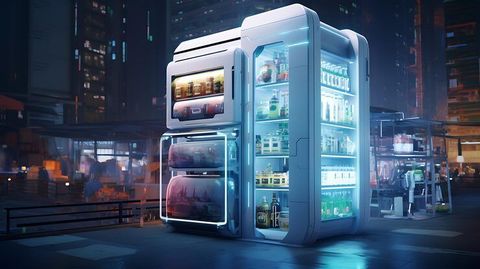
Smart refrigeration systems: Equipment connected to digital monitoring platforms.
Natural refrigerants: Cooling substances such as carbon dioxide, ammonia, and hydrocarbons.
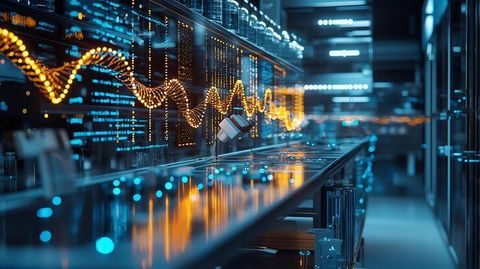
Internet of Things (IoT): Connected sensors that monitor temperature, humidity, and equipment performance.
Artificial intelligence (AI): Software that analyses operating patterns and supports predictive maintenance.
Heat recovery technology: Systems that reuse heat generated during refrigeration.
Variable-speed compressors: Components that adjust their operating speed according to cooling requirements.
These developments are gradually changing how commercial buildings and industrial facilities approach refrigeration management.
Why Sustainable Cooling Matters Today
Commercial refrigeration plays an important role in modern supply chains. Food retailers depend on temperature-controlled equipment to maintain product quality, while pharmaceutical facilities require carefully managed environments for temperature-sensitive materials.
However, refrigeration can create several operational and environmental challenges.
One major concern is electricity consumption. Refrigeration equipment frequently operates throughout the day and night, making energy efficiency an important consideration for facilities with continuous cooling requirements.
Another concern involves refrigerants. Certain traditional refrigerants have a high global warming potential (GWP). When released into the atmosphere, these substances can contribute to climate change.
Modern refrigeration technologies aim to address these challenges through improved system design, refrigerant selection, and intelligent controls.
Key areas of improvement include:
Reducing electricity consumption through advanced compressor technology.
Maintaining stable temperatures through automated monitoring.
Limiting refrigerant leakage through connected detection systems.
Improving food preservation through consistent temperature management.
Recovering waste heat for water heating and other building requirements.
Supporting environmental targets through lower-GWP refrigerants.
These improvements are relevant to supermarket operators, restaurant owners, food manufacturers, warehouse managers, building engineers, and pharmaceutical organisations.
Recent Developments and Emerging Trends in 2025–2026
The commercial refrigeration industry is experiencing changes driven by environmental regulations, digital innovation, and increasing demand for reliable temperature management.
Several developments are influencing the direction of the industry.
Smart Refrigeration and AI-Based Monitoring
Artificial intelligence is becoming an important part of modern refrigeration management. AI-powered platforms can analyse temperature readings, compressor activity, energy consumption, and equipment operating patterns.
These systems can help identify unusual performance before equipment failures occur. Predictive maintenance also helps facility managers plan inspections based on actual operating conditions rather than relying entirely on fixed schedules.
Growth of Natural Refrigerants
Natural refrigerants are receiving greater attention as businesses explore alternatives to high-GWP substances.
Important examples include:
Carbon dioxide (R-744): Used in supermarket refrigeration, cold storage, and industrial cooling applications.
Ammonia (R-717): Commonly used in large industrial refrigeration facilities.
Propane (R-290): Used in certain commercial display cabinets and compact refrigeration equipment.
Isobutane (R-600a): Used in selected small refrigeration applications.
Each refrigerant has different pressure, safety, and equipment requirements. Therefore, selection depends on the intended application and the technical capabilities of the facility.
Advanced Energy Management
Variable-speed compressors, electronic expansion valves, and intelligent defrost controls are improving refrigeration performance.
These technologies help equipment respond to changing cooling requirements. Instead of operating continuously at maximum capacity, certain systems can adjust their output according to actual demand.
Digital Temperature Tracking
Connected sensors are increasingly used in food distribution centres, supermarkets, and pharmaceutical warehouses.
They can provide:
Continuous temperature records.
Automatic alerts when temperature limits are exceeded.
Remote equipment monitoring.
Historical performance reports.
Improved visibility across multiple facilities.
Recent Regulatory Developments
In May 2026, the US Environmental Protection Agency issued a final rule reconsidering certain HFC technology-transition requirements. The changes addressed several sectors, including supermarket refrigeration and cold storage warehouses. This demonstrates that refrigeration regulations continue to evolve alongside industry requirements.
A 2025 technical revision of India's IS 5610 refrigerant specification also reflected the movement towards updated refrigerant standards and lower-GWP alternatives.
The broader direction is towards connected, energy-conscious, and environmentally responsible refrigeration systems.
Laws, Regulations, and Government Policies
Commercial refrigeration is influenced by international environmental agreements, national regulations, refrigerant standards, and energy-efficiency programmes.
The exact requirements depend on the country, refrigerant type, equipment category, and installation date.
International Environmental Framework
The Kigali Amendment to the Montreal Protocol establishes a global framework for gradually reducing the production and consumption of hydrofluorocarbons (HFCs).
Its implementation encourages countries to consider lower-GWP refrigerants and more environmentally responsible cooling technologies.
European Union Regulations
The European Union's revised F-gas Regulation (EU) 2024/573 entered into force on 11 March 2024.
It strengthens restrictions on fluorinated greenhouse gases and encourages the adoption of alternative refrigerants in refrigeration equipment.
The regulation affects different commercial refrigeration categories through specific restrictions and implementation dates.
United States Regulations
The American Innovation and Manufacturing (AIM) Act of 2020 provides a framework for reducing HFC production and consumption.
The US Environmental Protection Agency manages sector-specific restrictions through its Technology Transitions Program. Certain restrictions began on 1 January 2025, while other requirements have different implementation dates. Regulatory updates issued in May 2026 also revised selected requirements.
India's Regulatory Environment
India's refrigeration industry is influenced by the Montreal Protocol, the Ozone Depleting Substances Rules, and national standards.
Important considerations include:
The gradual phase-out of ozone-depleting refrigerants.
India's HFC phasedown commitments under the Kigali Amendment.
Refrigerant quality and technical specifications under relevant BIS standards.
Energy-efficiency initiatives administered by the Bureau of Energy Efficiency (BEE).
India's HFC phasedown is scheduled to begin in 2028, with a gradual reduction extending through 2040.
Organisations should check the latest national requirements before selecting refrigerants, modifying refrigeration systems, or planning new installations.
Helpful Tools and Resources for Refrigeration Management
Digital platforms, technical calculators, and industry resources can help facility managers understand refrigeration performance and environmental requirements.
Tool or resource | Main purpose |
|---|---|
Danfoss Coolselector2 | Refrigeration component selection and system calculations |
Copeland Select | Compressor and refrigeration system selection |
REFPROP | Refrigerant property calculations |
CoolPack | Refrigeration cycle analysis and technical calculations |
EPA HFC Resources | US refrigerant regulations and guidance |
European Commission F-gas Portal | European refrigerant regulatory information |
BEE India | Energy-efficiency information and standards |
IoT Temperature Sensors | Continuous temperature monitoring |
Building Management Systems (BMS) | Centralised building and cooling equipment monitoring |
Important Areas to Evaluate
When reviewing commercial refrigeration technologies, facility managers should consider:
Energy consumption and operating efficiency.
Refrigerant GWP and environmental impact.
Temperature accuracy and monitoring capabilities.
Equipment compatibility with alternative refrigerants.
Maintenance requirements and component availability.
Safety requirements for flammable or toxic refrigerants.
Using suitable technical resources can support better planning and informed refrigeration management.
Frequently Asked Questions
1. What is smart commercial refrigeration?
Smart commercial refrigeration uses connected sensors, digital controls, and monitoring platforms to manage cooling equipment. It can track temperature, identify unusual operating conditions, and provide alerts when equipment requires attention.
2. Which refrigerants are considered environmentally responsible alternatives?
Carbon dioxide (R-744), ammonia (R-717), propane (R-290), and isobutane (R-600a) are important alternatives. Their suitability depends on the equipment design, application, safety requirements, and operating environment.
3. How does artificial intelligence improve refrigeration systems?
AI analyses equipment performance, temperature changes, and energy consumption patterns. It can help identify potential faults, support predictive maintenance, and improve cooling schedules.
4. Why is energy efficiency important in commercial refrigeration?
Refrigeration equipment often operates continuously. Improving energy efficiency can reduce electricity consumption, support environmental objectives, and improve overall facility performance.
5. What are the main future trends in commercial refrigeration?
Major trends include natural refrigerants, AI-based monitoring, IoT sensors, variable-speed compressors, automated temperature controls, heat recovery, and advanced energy management systems.
Conclusion
The future of commercial refrigeration is increasingly connected to smart technology, environmental responsibility, and improved energy management. Traditional refrigeration equipment continues to play an important role, but modern developments are introducing new ways to monitor, control, and optimise cooling operations.
Natural refrigerants, intelligent compressors, connected sensors, and AI-powered monitoring are among the technologies shaping the industry's development. These innovations can help supermarkets, restaurants, warehouses, pharmaceutical facilities, and food manufacturers manage temperature-sensitive environments more effectively.
Government regulations and international environmental agreements are also influencing equipment design and refrigerant selection. As requirements evolve, organisations will need to consider energy performance, refrigerant safety, environmental impact, and long-term equipment compatibility.
In the coming years, sustainable commercial refrigeration is likely to become an increasingly important part of modern infrastructure. Combining digital innovation with responsible cooling practices can support more efficient operations and contribute to broader environmental objectives.
Ultimately, the transition towards smart and sustainable refrigeration represents an important development in the future of food preservation, industrial cooling, and temperature-controlled supply chains.

Related Post...
Discover How Smart Technologies Are Transforming Commercial Refrigeration
Updated: November 26, 2026
Read More
Commercial HVAC Innovations: Insights Into Smart Controls and Energy Management
Updated: November 26, 2026
Read More
Autonomous Warehouse Robots: An Overview of Business Uses and Operational Benefits
Updated: November 26, 2026
Read More