A Guide to Understanding Humanoid Robots and the Future of Manufacturing Jobs
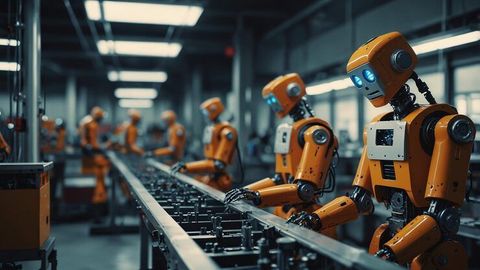
Humanoid robots are machines designed to perform physical activities using a body structure that resembles the human form. They typically have a head or sensor unit, a torso, arms, hands, and sometimes legs. Some industrial models use wheels instead of legs to move efficiently across factory floors.
These machines combine artificial intelligence (AI), computer vision, motion control, machine learning, and advanced robotic systems. Unlike traditional industrial robots, which are generally designed for specific movements, humanoid robots aim to perform different activities within environments originally designed for people.
Manufacturing facilities are exploring this technology to improve production flexibility and automate repetitive physical activities. Many factories already use robotic arms, automated guided vehicles, and computer-controlled machinery. Humanoid robotics represents another stage in industrial automation.
The main objective is not necessarily to remove human involvement. Instead, manufacturers are investigating whether humanoid robots can perform physically demanding, repetitive, or potentially hazardous activities while people concentrate on supervision, technical decisions, and complex operations.
How Humanoid Robots Work
Humanoid robots depend on several connected technologies to understand their surroundings and perform physical tasks.
Artificial Intelligence: Helps robots interpret information and select appropriate actions.
Computer Vision: Identifies objects, equipment, components, and surrounding obstacles.
Machine Learning: Allows systems to improve task performance using training data.
Sensors: Measure distance, movement, pressure, and environmental conditions.
Robotic Manipulation: Enables robots to grip, lift, move, and position manufacturing components.
Motion Planning: Determines how a robot should move without interfering with nearby equipment or people.
These technologies work together to support activities such as component handling, machine tending, material transportation, and visual inspection.
Why Manufacturers Are Exploring Humanoid Robotics
Manufacturing companies face several operational challenges, including repetitive production activities, workplace safety concerns, production delays, and difficulties maintaining consistent output. Humanoid robotics is being explored as one possible approach to these challenges.
Important applications include:
Automotive Manufacturing: Moving vehicle components, positioning metal parts, and supporting assembly operations.
Electronics Manufacturing: Handling small components and assisting with repetitive inspection activities.
Warehouse Operations: Transporting materials between storage areas and production stations.
Machine Tending: Loading and unloading components from industrial equipment.
Quality Inspection: Using cameras and sensors to identify visible defects.
Industrial Material Handling: Moving equipment and components between designated locations.
The technology may be particularly useful in facilities where existing workstations, tools, and production layouts were originally designed for human movement.
Are Human Workers Being Replaced?
The possibility of workforce displacement is one of the most important questions surrounding humanoid robots. However, current industrial applications do not demonstrate that human workers are becoming unnecessary across manufacturing industries.
Robots can perform certain physical activities, but they still face limitations involving decision-making, unexpected situations, complex manipulation, and coordination with people.
For example, a humanoid robot might repeatedly move components from one production station to another. However, a human technician may still be needed to identify unusual equipment problems, evaluate product quality, adjust production procedures, and supervise automated systems.
The impact on employment will depend on several factors:
The level of automation already present in a factory.
The complexity of manufacturing activities.
The reliability of humanoid robotic systems.
Workforce training and technical capabilities.
The financial and operational suitability of implementation.
Some repetitive positions may experience changes, while demand for robotics technicians, automation engineers, maintenance specialists, and AI system operators may increase.
Human Workers and Robots: A Comparison
Manufacturing activity | Human workers | Humanoid robots |
|---|---|---|
Repetitive handling | Can perform manually | Suitable for programmed repetition |
Complex decisions | Strong adaptability | Limited by training and system capabilities |
Equipment inspection | Can identify unusual problems | Can detect predefined visual indicators |
Heavy material movement | Subject to physical limitations | Can assist within rated capacity |
Unexpected situations | Can respond using experience | May require human intervention |
Workplace supervision | Can coordinate teams | Requires monitoring and system management |
This comparison shows why a combined workforce model may remain important. Human judgment and robotic precision can complement each other in suitable manufacturing environments.
Skills That May Become More Important
As factories introduce advanced robotics, employees may need additional technical knowledge.
Relevant capabilities include:
Industrial automation and robotics programming.
AI-assisted manufacturing operations.
Predictive maintenance and equipment monitoring.
Computer vision and sensor calibration.
Industrial cybersecurity.
Robot safety assessment and system integration.
Technical education and continuous training can help workers adapt to changing manufacturing environments.
Advantages and Challenges of Humanoid Robots
Humanoid robots have several potential advantages, but their limitations should also be considered.
Potential advantages | Important challenges |
|---|---|
Repetitive task automation | Complex programming requirements |
Reduced exposure to hazardous activities | Physical safety risks |
Flexible movement between workstations | Limited battery endurance |
Consistent execution of defined tasks | Unexpected situations can cause errors |
Integration with AI systems | Data security and privacy concerns |
Support for continuous production | Maintenance and integration requirements |
Their long-term effectiveness will depend on reliability, safe operation, technical performance, and how well they integrate with existing manufacturing systems.
The Importance of Human-Robot Collaboration
Human-robot collaboration involves people and robotic systems working within the same manufacturing environment.
Instead of treating automation as a complete replacement for human involvement, manufacturers can assign different responsibilities according to the strengths of each participant.
For example:
Robots can transport materials and perform repetitive handling.
Human technicians can supervise production processes.
Engineers can improve robotic movements and manufacturing procedures.
Quality specialists can evaluate complicated defects.
Maintenance teams can investigate equipment failures.
This approach may help manufacturing companies introduce automation while maintaining important human responsibilities.
Recent Developments in Humanoid Manufacturing Robotics (2025–2026)
The period from 2025 to 2026 has brought several important developments in industrial humanoid robotics. Manufacturers are moving beyond laboratory demonstrations and testing robots in actual production environments.
BMW and Figure AI – United States
In February 2026, BMW reported results from its humanoid robotics pilot at its Spartanburg facility in South Carolina. Figure 02 had supported the production of more than 30,000 BMW X3 vehicles over approximately ten months.
According to BMW, the robot handled more than 90,000 components and completed approximately 1,250 operating hours. Its responsibilities included positioning sheet-metal components for welding. The project also provided insights into safety arrangements and factory integration.
BMW and Hexagon – Germany
In February 2026, BMW announced a European humanoid robotics pilot at its Leipzig facility. The project focuses on applications involving high-voltage battery assembly and component manufacturing.
By September 2026, BMW had reported the introduction of Hexagon's AEON humanoid robot at the Leipzig plant. The project is examining how physical AI can support different production activities.
Siemens and Humanoid – April 2026
Siemens and Humanoid announced testing of the HMND 01 Alpha humanoid robot at Siemens' electronics factory in Erlangen, Germany, on April 16, 2026.
The testing focused on autonomous logistics activities. The initiative demonstrates growing interest in combining industrial automation with physical AI systems.
Hexagon and Schaeffler – April 2026
On April 22, 2026, Hexagon and Schaeffler announced plans for at least 1,000 AEON humanoid robots across Schaeffler's global factory network by 2032.
The companies reported that an earlier pilot demonstrated the robot's ability to load and unload parts at a multi-machine station and perform inspection activities. The planned deployment represents a significant step toward broader industrial testing.
China's Humanoid Robotics Development – 2026
China has continued developing its humanoid robotics ecosystem. On August 25, 2026, a draft national standards guideline proposed developing at least 100 key standards for the industry by 2028.
The proposed framework covers capability testing, technical systems, application scenarios, and safety governance.
Development overview based on company announcements and government publications available in November 2026.
Manufacturing Robotics: Important Trends
Several developments are influencing the direction of humanoid robotics.
Physical AI: Connecting artificial intelligence with machines that interact with physical environments.
Advanced Computer Vision: Improving object recognition and component positioning.
Digital Twins: Using virtual factory models to examine robotic operations before physical deployment.
Autonomous Material Handling: Developing robots capable of transporting materials between production stations.
Human-Robot Collaboration: Creating environments where people and robots can coordinate activities.
Predictive Maintenance: Using sensor information to identify potential equipment problems before failures occur.
These developments indicate that manufacturing automation is becoming more flexible and increasingly connected to intelligent software systems.
Laws and Policies Affecting Humanoid Robots
Humanoid robots operate within existing industrial safety, machinery, employment, and data protection frameworks. Regulations differ between countries, and manufacturers must examine the requirements applicable to their facilities.
India
India's Occupational Safety, Health and Working Conditions Code, 2020, came into force on November 21, 2025. It establishes a framework covering workplace safety, health, and working conditions across applicable establishments.
Manufacturers introducing humanoid robots must consider workplace risk assessment, employee protection, machinery safety, and appropriate training. The Code does not create a separate legal exemption for workplaces using AI-powered robots.
United States
The Occupational Safety and Health Administration (OSHA) oversees workplace safety requirements. Although OSHA does not have a separate comprehensive standard specifically for the robotics industry, existing requirements concerning machine guarding, hazardous energy control, protective equipment, and workplace safety remain relevant.
Manufacturers can also refer to recognized industrial robotics safety standards, including ANSI/RIA and ISO guidance.
European Union
The European Union has introduced regulatory frameworks addressing machinery safety and artificial intelligence.
The EU AI Act establishes requirements for certain AI applications according to their risk classification. Its workplace implications depend on how an AI system is used and whether specific high-risk provisions apply.
The Machinery Regulation (EU) 2023/1230 establishes safety requirements for machinery placed on the European market. Its application date is January 20, 2027. Manufacturers and system integrators should evaluate the relevant conformity and safety obligations before introducing robotic equipment.
International Safety Standards
ISO 10218-1:2025, published in February 2025, addresses safety requirements for industrial robots. Its companion standard, ISO 10218-2, covers industrial robot systems and their integration.
These standards provide important guidance on robot design, risk reduction, and safe integration into industrial environments.
Tools and Resources for Understanding Humanoid Robotics
Several technical platforms and resources can help manufacturers, engineers, and students understand industrial robotics.
Tool or resource | Main purpose |
|---|---|
ROS 2 | Robotics software development and communication |
NVIDIA Isaac Sim | Robotics simulation and testing |
Siemens NX | Engineering design and manufacturing simulation |
MATLAB and Simulink | Robotics modelling and control systems |
RoboDK | Industrial robot simulation and programming |
ISO robotics standards | Industrial robot safety guidance |
OSHA Robotics Resources | Workplace robotics safety information |
Digital Twin Platforms | Virtual manufacturing environment modelling |
These resources support different stages of robotic development, including programming, simulation, safety evaluation, system integration, and workforce education.
How Manufacturers Can Prepare for Humanoid Robotics
Introducing humanoid robots requires more than purchasing equipment or installing new software. Manufacturers should examine their production requirements and evaluate whether the technology is appropriate for specific activities.
Important considerations include:
Task Assessment: Identify repetitive activities that may be suitable for robotic automation.
Safety Planning: Evaluate collision risks, movement areas, emergency procedures, and protective equipment.
Technical Integration: Examine compatibility with existing machinery and manufacturing software.
Employee Training: Develop technical knowledge in robotics, maintenance, and automation supervision.
Performance Monitoring: Measure task accuracy, operating time, downtime, and reliability.
Gradual Implementation: Begin with controlled testing before expanding to additional production activities.
A structured implementation approach can help organizations understand the actual capabilities and limitations of humanoid systems.
Frequently Asked Questions
1. Are humanoid robots replacing human workers in manufacturing?
Not completely. Humanoid robots are currently being tested for repetitive, physically demanding, and predictable activities. Human workers remain important for supervision, maintenance, complex decisions, and quality management.
2. Which manufacturing industries can use humanoid robots?
Automotive, electronics, aerospace, industrial machinery, logistics, and component manufacturing are potential application areas. Their suitability depends on production requirements and technical capabilities.
3. What technologies make humanoid robots intelligent?
They use artificial intelligence, machine learning, computer vision, motion planning, sensors, and robotic manipulation. These technologies help them recognize objects, understand surroundings, and perform physical activities.
4. Will humanoid robots create new technical opportunities?
Their development may increase demand for expertise in robotics programming, AI engineering, industrial automation, maintenance, cybersecurity, and robotic system integration.
5. Are humanoid robots safe to use around human workers?
They can be operated in appropriately designed environments, but safety cannot be assumed. Risk assessments, protective measures, emergency procedures, employee training, and compliance with applicable standards are essential.
Conclusion
Humanoid robots are becoming an important area of research and development in modern manufacturing. Their ability to perform physical activities in environments designed for people creates new possibilities for industrial automation.
Developments involving BMW, Figure AI, Hexagon, Schaeffler, and Siemens demonstrate that manufacturers are increasingly testing humanoid robots in real production environments. However, these developments should not be interpreted as evidence that human workers will disappear from factories.
Robotic systems still face challenges involving reliability, safety, adaptability, technical integration, and complex decision-making. Human experience remains essential for managing unexpected situations, maintaining equipment, and overseeing production quality.
The future of manufacturing will likely involve a combination of human expertise, traditional industrial automation, and advanced humanoid robotics. Rather than focusing only on worker replacement, the more important question is how manufacturers can introduce these technologies responsibly while preparing their workforce for changing industrial requirements.

Related Post...
Explore How Artificial Intelligence Is Transforming Global Manufacturing Industries
Updated: November 26, 2026
Read More
Explore the Future of Smart Manufacturing: Global Trends to Watch in 2027
Updated: November 26, 2026
Read More
Key Insights Into Global Industrial Equipment Demand From Data Centre Growth
Updated: November 26, 2026
Read More