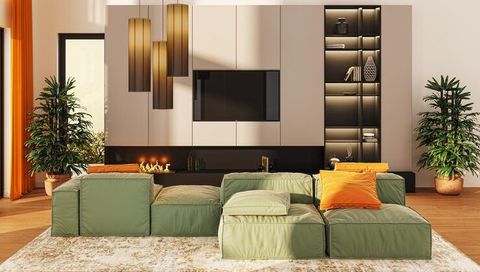
Explore Modular Living Room Sets: Designs, Layouts, and Modern Features
Modular living room sets are furniture arrangements made from separate components that can be combined, rearranged, or expanded according to household requirements. Unlike traditional furniture collections with fixed configurations, modular furniture provides flexibility in how different pieces fit together.
A typical modular living room arrangement may include sectional sofas, corner units, armless seats, ottomans, chaise lounges, storage sections, and individual accent chairs. Each component serves a particular purpose while contributing to a coordinated interior design.
The concept developed in response to changing residential layouts, smaller apartments, flexible living arrangements, and evolving interior design preferences. Modern households increasingly require furniture that can accommodate different activities without permanently occupying a particular arrangement.
Common Types of Modular Furniture
Different modular living room configurations address different spatial and functional requirements.
Modular sectional sofas: Multiple seating sections that connect to create different sofa arrangements.
Corner sofa units: Components designed to maximize seating around room corners.
Modular lounge chairs: Individual seating elements that can be positioned separately or together.
Storage ottomans: Flexible furniture pieces that provide additional seating and concealed storage.
Convertible sofa sections: Components that can accommodate different seating and relaxation positions.
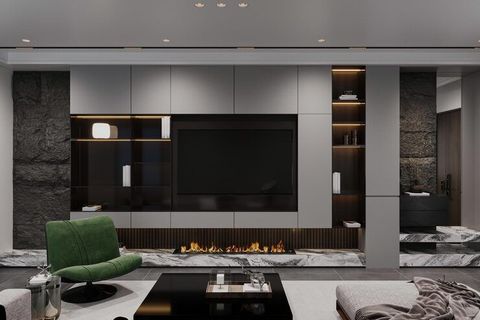
Modular TV units: Separate cabinets and shelving components arranged according to entertainment requirements.
Materials and Construction
Material selection influences durability, appearance, maintenance, and overall furniture performance.
Material | Common application | Main characteristics |
|---|---|---|
Solid wood | Frames and supporting structures | Strength and natural appearance |
Engineered wood | Cabinets and shelving | Consistent construction |
Metal | Frames and connectors | Structural stability |
Linen fabric | Upholstery | Breathable texture |
Polyester fabric | Sofa upholstery | Practical maintenance |
Leather | Seating surfaces | Distinctive appearance |
High-density foam | Cushions | Shape retention and support |
The quality of connectors, frame construction, upholstery, and cushioning determines how effectively individual components function together.
Why Modular Living Room Sets Matter Today
Living spaces have become increasingly multifunctional. A living room may serve as an entertainment area, a workspace, a reading corner, and a gathering place for family members. Modular furniture helps accommodate these different activities without requiring a completely different furniture arrangement for each purpose.
Adaptability for Different Homes
One important advantage of modular furniture is its ability to adapt to changing residential requirements.
For example, a small apartment may initially require a compact two-piece sectional sofa. When the household needs additional seating, another module can be incorporated into the arrangement, provided the furniture system supports expansion.
This flexibility is particularly relevant for:
Apartment residents with limited floor space.
Families whose seating requirements change over time.
People who frequently rearrange their interiors.
Homeowners designing multifunctional living areas.
Individuals moving between different residential layouts.
Better Space Planning
Modular furniture supports more efficient room planning because individual components can be positioned according to available floor space.
A corner configuration may leave the central area open, while a straight arrangement can create a more spacious appearance in narrow rooms.
Important planning considerations include:
Measuring the room before selecting furniture dimensions.
Maintaining comfortable walking pathways.
Considering doorways, windows, and electrical outlets.
Checking whether modules can pass through staircases and entrances.
Leaving sufficient clearance around tables and entertainment units.
Functional Interior Design
Modular living room sets also support different interior design approaches. Neutral upholstery can complement contemporary interiors, while textured fabrics and wooden elements can create a warmer appearance.
Interior designers frequently consider furniture proportions, lighting, color coordination, and room circulation when developing modular furniture layouts.
Recent Trends and Developments in Modular Living Room Furniture
Modular furniture continues to evolve alongside residential architecture, material innovation, and consumer preferences. During 2025 and 2026, several design directions have remained particularly relevant.
Flexible and Multifunctional Furniture
Multifunctional furniture continues to influence residential interior planning. Modular seating with movable backrests, detachable sections, and integrated storage addresses the need for adaptable living environments.
Furniture arrangements are increasingly designed around different daily activities rather than a single fixed seating configuration.
Curved and Organic Furniture Designs
Rounded sofa edges, curved sectional arrangements, and softer geometric forms have remained visible in contemporary interior design.
These designs create a less rigid appearance and can complement open-plan residential interiors. Curved modules also introduce different possibilities for arranging seating around central tables.
Sustainable Furniture Materials
Environmental considerations have encouraged greater attention to recycled textiles, responsibly sourced timber, durable upholstery, and material transparency.
Manufacturers are also exploring components that can be maintained, repaired, or replaced individually rather than requiring the entire furniture arrangement to be discarded.
Technology-Integrated Living Spaces
Smart home technology is influencing entertainment furniture and residential layouts.
Some contemporary furniture configurations incorporate:
Integrated USB charging points.
Cable management compartments.
Adjustable lighting elements.
Concealed electrical connections.
Space for smart entertainment equipment.
However, electrical components should be properly installed and maintained according to relevant safety requirements.
Design Direction Comparison
Design trend | Main feature | Interior application |
|---|---|---|
Multifunctional seating | Adjustable components | Compact apartments |
Curved sectional sofas | Rounded shapes | Contemporary homes |
Sustainable upholstery | Recycled materials | Environment-conscious interiors |
Minimalist furniture | Simple geometric forms | Modern living rooms |
Smart furniture | Integrated technology | Connected households |
These developments represent broader design directions rather than a universal change adopted by every manufacturer.
Laws, Regulations, and Furniture Safety Standards
Modular living room sets are affected by product safety requirements, chemical restrictions, fire prevention standards, consumer protection rules, and environmental regulations. The specific requirements depend on the country where furniture is manufactured, imported, distributed, or used.
Furniture Safety Regulations in the United States
In the United States, the Consumer Product Safety Commission (CPSC) oversees various consumer product safety requirements.
Upholstered furniture is subject to federal flammability requirements under the Flammable Fabrics Act framework. The relevant requirements incorporate California Technical Bulletin 117-2013 for upholstered furniture.
Manufacturers and importers must also consider applicable testing, labeling, and certification obligations.
These requirements are particularly relevant to:
Modular sectional sofas.
Upholstered lounge chairs.
Fabric-covered ottomans.
Foam-filled seating components.
Furniture containing upholstered cushions.
European Union Furniture Requirements
The European Union has several regulatory frameworks that can affect furniture products.
Important examples include:
General Product Safety Regulation (GPSR): Regulation (EU) 2023/988, applicable from December 13, 2024, establishes general product safety obligations for consumer products.
REACH Regulation: Addresses chemical substances and restrictions that may affect upholstery, coatings, adhesives, and other furniture materials.
Environmental requirements: European waste and sustainability policies influence material selection, product durability, and waste management.
Furniture manufacturers and importers should evaluate the applicable requirements for their particular products rather than assuming that every furniture category follows identical rules.
United Kingdom Furniture Fire Safety
The United Kingdom has specific fire safety requirements for upholstered furniture and furnishings under the Furniture and Furnishings (Fire) (Safety) Regulations 1988, as amended.
These requirements address aspects such as filling materials, covers, fire resistance, and product labeling.
Consumer Protection and Environmental Considerations
Furniture regulations can also cover product descriptions, material declarations, warranties, packaging, and consumer rights.
Before selecting modular living room furniture, consumers can consider:
Whether upholstery materials meet applicable safety standards.
Whether the manufacturer provides accurate material information.
Whether the furniture has appropriate safety labels.
Whether the components have suitable structural support.
Whether replacement covers and individual components are available.
Regulatory requirements change over time, so manufacturers should consult the relevant national authorities and current standards for their markets.
Tools and Resources for Modular Living Room Planning
Several digital tools and practical resources can help homeowners, interior designers, architects, and furniture manufacturers understand modular living room arrangements.
Interior Design and Room Planning Applications
1. SketchUp
SketchUp is a three-dimensional design application used to develop furniture layouts, visualize room dimensions, and examine how modular sectional sofas fit into residential interiors.
2. Floorplanner
Floorplanner helps users create two-dimensional floor plans and three-dimensional room representations. It can be useful when comparing different furniture arrangements.
3. Planner 5D
Planner 5D provides digital interior design features that help users experiment with room layouts, furniture placement, and decorative elements.
4. IKEA Kreativ
IKEA Kreativ offers digital room visualization capabilities for supported products and markets. It can help users explore furniture placement within a residential environment.
Measurement and Space Planning Resources
Accurate measurements are essential when planning modular furniture configurations.
Useful measurements include:
Overall room length and width.
Available wall space.
Door and window dimensions.
Sofa seat depth and height.
Walking clearance around furniture.
Distance between seating and television screens.
A basic room planning worksheet can help organize these measurements.
Measurement | Information to record |
|---|---|
Room dimensions | Length and width |
Ceiling height | Floor-to-ceiling measurement |
Sofa dimensions | Width, depth, and height |
Doorway clearance | Available entrance width |
Walking space | Clear circulation area |
Module dimensions | Measurements of each component |
Furniture Research and Industry Resources
Additional resources can help users understand furniture construction, materials, safety, and interior design.
BIFMA: Provides industry standards and information concerning furniture performance and safety.
CPSC: Publishes consumer product safety information and applicable furniture requirements in the United States.
Bureau of Indian Standards (BIS): Provides information about Indian product standards and certification frameworks.
European Chemicals Agency (ECHA): Publishes information about chemical safety and REACH requirements.
Interior design publications: Provide information about furniture layouts, upholstery materials, contemporary styles, and residential design developments.
These resources can support research and planning, although individual products should always be evaluated against the standards applicable to their intended market.
Frequently Asked Questions
What is a modular living room set?
A modular living room set is a furniture collection consisting of separate components that can be connected, separated, or rearranged. Common components include sectional sofas, corner seats, ottomans, lounge chairs, and storage units.
Are modular sofas suitable for small apartments?
Yes. Modular sofas can be suitable for smaller apartments because individual seating components can be arranged according to available floor space. Compact configurations can also help maintain clear walking pathways.
Which materials are commonly used in modular living room furniture?
Common materials include solid wood, engineered wood, metal, polyester, linen, leather, and high-density foam. Material selection depends on structural requirements, appearance, comfort, and maintenance preferences.
How can homeowners plan a modular living room layout?
Homeowners can begin by measuring room dimensions, identifying entrances and windows, and recording individual furniture measurements. Digital interior design applications such as SketchUp, Planner 5D, and Floorplanner can help visualize different arrangements.
What should consumers consider when evaluating modular furniture safety?
Consumers should examine frame stability, connector strength, upholstery materials, applicable fire safety requirements, product labeling, and manufacturer documentation. Electrical features should also meet relevant safety requirements.
Conclusion
Modular living room sets represent an adaptable approach to contemporary residential furniture design. Their separate components allow households to create different seating configurations while accommodating changing spatial and functional requirements.
Developments in multifunctional furniture, sustainable materials, curved designs, and integrated technology continue to influence the modular furniture industry in 2025 and 2026.
Understanding furniture materials, construction methods, ergonomic considerations, room dimensions, and applicable safety regulations can help homeowners make informed interior design decisions.
Whether used in compact apartments, family residences, or larger open-plan homes, modular furniture provides a flexible framework for organizing comfortable and functional living environments.

Related Post...
Round Dining Table Designs: Explore Elegant Styles for Modern Living Spaces
Updated: October 29, 2026
Read More
Deep-Seat Ultra-Soft Lounge Chairs: Key Insights Into Comfort and Construction
Updated: November 04, 2026
Read More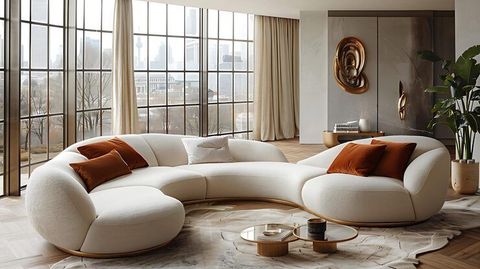
A Complete Guide to Customizable Sofa Combinations and Design Options
Updated: November 02, 2026
Read More