Japanese Zen Floor Dining Sets Guide: Styles, Materials, and Design Ideas
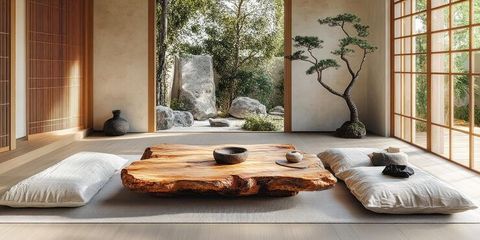
Japanese Zen floor dining sets are furniture arrangements designed around low dining tables and floor-level seating. They reflect traditional Japanese interior principles, including simplicity, balance, natural materials, and efficient use of space. These arrangements are influenced by Japanese cultural practices, particularly the traditional use of tatami flooring and low wooden tables.
Unlike conventional dining furniture, which generally includes a raised table and standard-height chairs, Zen-inspired dining arrangements bring people closer to the floor. Seating may include floor cushions, zabuton mats, zaisu chairs without legs, or compact back-supported floor chairs.
The concept is closely connected with Japanese aesthetics, where the surrounding environment is considered as important as the furniture itself. Uncluttered spaces, natural textures, soft lighting, and practical arrangements contribute to a calm dining environment.
Historical Background and Cultural Influence
Traditional Japanese homes have historically used tatami rooms for several daily activities, including dining, resting, studying, and social gatherings. Low tables, commonly known as chabudai, became familiar household furniture during the modern development of Japanese domestic interiors.
The arrangement was practical because furniture could be moved or stored when a room needed to serve another purpose. This flexibility remains relevant in contemporary apartments and smaller homes.
Zen-inspired interiors also draw on concepts such as wabi-sabi, which appreciates natural irregularities, simplicity, and the passage of time. However, not every Japanese floor dining arrangement is formally connected to Zen Buddhism. Modern designs often combine traditional visual influences with contemporary furniture requirements.
Main Components of a Japanese Floor Dining Set
A traditional Japanese floor dining set generally consists of several coordinated elements. Each component has a particular function in maintaining comfort, stability, and visual consistency.
Chabudai table: A low dining table, often made from solid wood, with a simple rectangular, circular, or oval surface.
Zabuton cushions: Flat seating cushions placed directly on the floor to provide padding.
Zaisu chairs: Back-supported floor chairs without conventional legs, designed for people who prefer additional support.
Tatami mats: Traditional woven flooring made using natural or processed materials, commonly used in Japanese-style rooms.
Low dining accessories: Small serving trays, ceramic bowls, chopstick holders, and tableware that complement the arrangement.
Common Materials and Construction
Material selection affects durability, maintenance, appearance, and the overall experience of floor-level dining.
Material | Common application | Main characteristics |
|---|---|---|
Solid oak | Dining tables | Durable and visible grain |
Walnut | Table surfaces | Dark colour and natural texture |
Hinoki wood | Traditional furniture | Distinctive fragrance and light appearance |
Bamboo | Decorative elements | Lightweight and natural appearance |
Cotton | Zabuton cushions | Soft texture and breathable construction |
Tatami | Floor coverings | Traditional woven surface |
Wood remains an important material in Japanese minimalist furniture. Its natural grain and relatively simple appearance complement neutral interiors.
The construction should also be considered. Table joints, leg stability, surface finishing, cushion thickness, and the quality of upholstery influence long-term usability.
Why Japanese Zen Floor Dining Sets Matter Today
Efficient Use of Residential Space
Smaller residential layouts have encouraged interest in multifunctional furniture. A low dining table can support several activities, including meals, reading, studying, and informal discussions.
In apartments where a separate dining room is unavailable, Japanese floor dining furniture can help establish a flexible dining area within a larger living space.
Some designs also feature folding legs or lightweight construction. These characteristics make rearranging the room easier when the dining area is not being used.
Cultural Appreciation and Interior Design
Japanese interior design has gained international attention because of its emphasis on simplicity, natural materials, and practical room arrangements.
Zen-inspired dining furniture can complement several interior styles:
Japanese traditional interiors with tatami flooring.
Japandi interiors combining Japanese and Scandinavian influences.
Minimalist homes with neutral colours and limited decoration.
Contemporary apartments featuring natural wood and soft lighting.
Comfort, Posture, and Accessibility Considerations
Floor dining arrangements are not equally comfortable for everyone. People with knee, hip, back, or mobility difficulties may find sitting close to the floor challenging.
Zaisu chairs with backrests can provide additional support, while thicker cushions may improve seating comfort. However, these features do not automatically make floor dining suitable for every individual.
Before selecting a low dining arrangement, households should consider:
The height of the dining table.
The distance between the table and seating.
Available legroom.
The firmness and thickness of cushions.
The physical needs of regular users.
For mixed-age households, combining floor seating with conventional chairs may provide greater flexibility.
Space Planning and Furniture Dimensions
Appropriate dimensions help maintain a comfortable dining arrangement. The following figures are general planning references rather than mandatory Japanese standards.
Furniture element | Typical planning range |
|---|---|
Low dining table height | 25–40 cm |
Small two-person tabletop | 60–80 cm diameter |
Four-person tabletop | 90–120 cm diameter |
Floor cushion thickness | 5–10 cm |
Dining area clearance | 60–90 cm where practical |
Actual dimensions depend on body proportions, seating arrangements, room dimensions, and the intended use of the furniture.
Recent Developments and Design Trends in 2025–2026
Renewed Interest in Japanese Interior Design
Japanese-inspired interiors received renewed attention during 2025. Japan's international cultural exposure, including the Osaka-Kansai Expo, contributed to broader interest in Japanese design, architecture, and everyday living traditions.
The 2025–2026 interior design landscape reflects renewed interest in Japanese-modern interiors, Japandi aesthetics, and the use of regional Japanese materials.
This development is relevant to Japanese Zen floor dining sets because it connects traditional furniture arrangements with contemporary residential design.
Rounded Tables and Flexible Dining Areas
Round dining tables are another notable development in Japanese residential interiors.
Rounded dining furniture can be particularly useful in homes where efficient circulation and smaller residential spaces are important considerations.
For low dining furniture, rounded surfaces can help create a more conversational arrangement. They also eliminate sharp tabletop corners, although appropriate stability and child safety remain important.
Natural Finishes and Minimalist Furniture
During 2026, Japandi dining furniture discussions have continued to highlight natural wood finishes, visible grain, rounded edges, and restrained decoration.
Common design directions include:
Light oak and ash finishes.
Dark walnut tabletops.
Rounded or oval table shapes.
Neutral beige, grey, and earthy colours.
Simple cushions with natural-looking fabrics.
Furniture with folding or multifunctional components.
Multifunctional Residential Arrangements
Modern households increasingly consider how individual rooms can support multiple activities. A low dining table may function as a dining surface during meals and as a temporary workspace at other times.
However, the arrangement requires practical planning. A table should have sufficient stability and an appropriate surface for its intended activities.
Japanese Regulations, Product Standards, and Consumer Policies
Household Furniture Quality and Labelling
Japanese furniture manufacturers and importers operate within a regulatory environment that includes consumer protection, product safety, and quality representation requirements.
The Household Goods Quality Labeling Act establishes labelling requirements for designated household products. It aims to help consumers receive appropriate information about product characteristics. The requirements apply to specified product categories rather than every furniture item automatically.
For Japanese floor dining furniture, relevant considerations include:
Accurate descriptions of materials and product characteristics.
Clear information about applicable textile or material labelling requirements.
Appropriate care and maintenance instructions.
Avoidance of misleading descriptions about construction or quality.
Household Product Safety Regulations
Japan's Act on the Control of Household Products Containing Harmful Substances establishes restrictions relating to specified harmful substances in household products.
The Ministry of Health, Labour and Welfare oversees this framework and provides information about regulated substances, testing, and product safety.
This is relevant when furniture incorporates textiles, coatings, adhesives, or other materials that may fall within regulated product categories.
Consumer Product Safety
Japan's Consumer Product Safety Act establishes a framework for preventing hazards associated with consumer products.
The Ministry of Economy, Trade and Industry administers product safety legislation, including requirements relevant to designated consumer products. Its regulatory framework was updated through amendments and related measures in 2026.
For household furniture, practical safety considerations include:
Stable table construction.
Smooth edges and properly finished surfaces.
Appropriate weight distribution.
Safe materials and coatings.
Clear instructions for assembly and maintenance.
Not every low dining table or floor cushion requires a specific government safety certification. Applicable requirements depend on the product category and materials.
Housing and Interior Considerations
Japan's Building Standards Act governs various aspects of building construction, including structural requirements and fire prevention.
Although ordinary movable dining furniture is generally not regulated like building structures, permanently installed interior elements and certain construction materials may be subject to additional requirements.
Tools and Resources for Japanese Floor Dining Furniture
Several practical resources can help households understand furniture dimensions, room layouts, materials, and maintenance.
Tool or resource | Main purpose |
|---|---|
Room Planner applications | Planning dining layouts and furniture placement |
SketchUp | Creating three-dimensional furniture and room models |
RoomClip | Exploring Japanese residential interiors |
Houzz | Reviewing interior design styles and room arrangements |
IKEA Room Planner | Understanding furniture placement and room dimensions |
Measuring tape | Checking table dimensions and available space |
Wood moisture meter | Assessing moisture levels in wooden furniture |
RoomClip Trend Reports | Understanding Japanese housing and interior trends |
Useful Planning Methods
Before arranging a Japanese-style dining area, consider the following steps:
Measure the available floor area.
Identify the number of regular dining users.
Determine suitable table dimensions.
Select appropriate floor cushions or zaisu chairs.
Check whether the flooring is suitable for regular floor seating.
Consider ventilation, cleaning requirements, and furniture storage.
These methods help create a practical arrangement without overcrowding the room.
Frequently Asked Questions
What Is the Difference Between a Chabudai and a Regular Dining Table?
A chabudai is a traditional Japanese low table designed for floor-level activities. A regular dining table is generally taller and intended for use with conventional dining chairs. Chabudai tables can also be used for reading, studying, and other household activities.
Are Japanese Zen Floor Dining Sets Suitable for Small Apartments?
Yes. Their low-profile construction can help maintain an open visual appearance and provide flexible room arrangements. Folding tables and stackable cushions can also help households manage limited space. However, the actual space requirements depend on the number of users and the dimensions of the furniture.
What Is the Difference Between Zabuton and Zaisu Seating?
Zabuton is a flat cushion placed on the floor, while zaisu is a floor chair with a backrest and no conventional legs. Zabuton provides basic cushioning, whereas zaisu offers additional back support.
Which Wood Is Commonly Used in Japanese Low Dining Tables?
Oak, walnut, ash, and Japanese cypress are among the woods used in Japanese-inspired furniture. Each has different grain patterns, colours, and physical characteristics. The appropriate choice depends on the desired appearance, durability, and maintenance requirements.
Do Japanese Floor Dining Sets Require Tatami Flooring?
No. Although traditional arrangements frequently use tatami flooring, modern Japanese-inspired dining furniture can also be placed on suitable wooden, laminate, or other level flooring. Protective mats or floor pads can help reduce scratching and surface damage.
Conclusion
Japanese Zen floor dining sets represent a combination of traditional Japanese living practices and contemporary furniture design. Their defining characteristics include low dining tables, floor-level seating, natural materials, simple construction, and flexible room arrangements.
Renewed interest in Japanese-modern interiors and Japandi design during 2025–2026 demonstrates how traditional design influences continue to shape contemporary residential spaces. At the same time, furniture dimensions, seating comfort, material quality, and household safety remain important considerations.
Understanding chabudai tables, zabuton cushions, zaisu chairs, tatami flooring, and Japanese minimalist furniture principles helps households evaluate different dining arrangements. With appropriate planning, these elements can create functional and visually balanced dining environments in both traditional Japanese homes and contemporary international residences.

Related Post...

Flexible Open-Shelf Book Towers: Key Insights Into Design and Organization
Updated: November 04, 2026
Read More
Insights Into Modern Backyard Swing Chair Designs for Every Outdoor Setting
Updated: October 28, 2026
Read More