A Complete Guide to Customizable Sofa Combinations and Design Options
Customizable sofa combinations refer to seating arrangements that allow different sofa components, shapes, materials, colours, and configurations to be combined according to individual preferences and room requirements. Unlike traditional fixed sofas, customizable furniture provides greater flexibility in designing living room seating arrangements.
These combinations commonly include modular sofa units, sectional sofas, corner sofas, chaise lounges, armless seats, ottomans, and individual seating sections. Each component can serve a different purpose while maintaining a consistent overall appearance.
For example, a modular sectional sofa may include a three-seat section, a corner unit, and a chaise lounge. These elements can be arranged in an L-shaped or U-shaped configuration depending on the available floor space.
How Modular Sofa Configurations Work
Modular sofa systems are generally constructed using individual seating sections connected through brackets, clips, hooks, or other joining mechanisms. Some designs also use independent units that remain together through their weight and positioning.
Common configurations include:
L-shaped sofas: Suitable for corner placement and open-plan living rooms.
U-shaped sofas: Provide multiple seating positions for larger households and shared spaces.
Straight modular sofas: Create traditional seating arrangements with adjustable seating capacity.
Curved sofa combinations: Introduce rounded shapes and softer visual proportions.
Sectional sofas with chaise lounges: Provide extended seating for relaxation.
Modular sofa beds: Combine everyday seating with additional sleeping arrangements.
The main purpose of these systems is to create furniture that can adapt to different room dimensions, household requirements, and interior design preferences.
Main Components of Customizable Sofas
A customizable sofa can contain several interchangeable or individually selected components.
Component | Primary Function |
|---|---|
Corner unit | Connects two seating sections |
Armless module | Expands the seating arrangement |
Chaise lounge | Provides extended leg support |
Ottoman | Additional seating or foot support |
Sofa armrest | Provides support and defines sofa shape |
Backrest module | Supports the upper body |
Storage module | Provides concealed household storage |
Understanding these components helps with planning a balanced furniture arrangement.
Why Customizable Sofa Combinations Matter Today
Changing Residential Space Requirements
Modern residential layouts increasingly include multifunctional spaces. Living rooms may function as entertainment areas, reading corners, workspaces, and family gathering spaces.
Fixed furniture arrangements can create difficulties when room layouts change. Modular sofa combinations address this challenge by allowing individual seating components to be repositioned.
This flexibility is particularly relevant for:
Apartments with limited floor space.
Open-plan residential interiors.
Family homes with changing seating requirements.
Rental properties with different room configurations.
Homes that regularly undergo interior redesigns.
Personalization and Interior Design
Personalization has become an important consideration in contemporary furniture design. Different households have different preferences regarding seating depth, backrest height, armrest width, upholstery texture, and colour combinations.
Customizable sofa designs allow these characteristics to be selected according to the surrounding interior.
For instance, a neutral-coloured modular sofa may complement minimalist interiors, while contrasting upholstery can introduce visual interest into contemporary living spaces.
Material Selection and Durability
Upholstery materials influence the appearance, comfort, maintenance requirements, and expected lifespan of sofas.
Common options include:
Cotton: A natural textile with a soft appearance and breathable structure.
Linen: Known for its natural texture and relaxed visual character.
Velvet: Provides a smooth surface and distinctive appearance.
Chenille: Features a textured construction and soft feel.
Leather: Commonly used for its distinctive finish and relatively straightforward surface cleaning.
Performance fabrics: Designed to address particular requirements involving stains, moisture, and everyday wear.
The internal frame, cushioning density, suspension system, stitching, and connecting hardware are equally important when evaluating long-term furniture performance.
Space Planning and Seating Capacity
Customizable sofa combinations help households use available floor space more effectively.
A sectional sofa can define a seating zone in an open-plan room without requiring additional partitions. Smaller modular sections can also be separated to create individual seating areas.
Before selecting a configuration, consider:
Room length and width.
Doorway and corridor dimensions.
Walking space around the sofa.
Television and entertainment placement.
Natural lighting and window positions.
Existing furniture dimensions.
These measurements help prevent overcrowding and support a more practical interior layout.
Recent Updates and Custom Sofa Design Trends (2025–2026)
Growing Interest in Modular Furniture
During 2025 and 2026, modular furniture continued to receive attention in residential interior design. Designers increasingly highlighted adaptable seating arrangements that accommodate different household activities.
At the 2026 Salone del Mobile in Milan, held from April 21 to 26, modular sofas, flexible seating arrangements, tactile materials, and integrated interior concepts featured prominently in furniture design discussions.
Curved Shapes and Organic Sofa Designs
Rounded sofa arms, curved backrests, sculptural seating, and softer silhouettes are becoming prominent design directions.
These shapes create a different visual character compared with conventional rectangular furniture. Curved modular sections can also be incorporated into larger seating arrangements to create distinctive living room layouts.
Performance Upholstery and Textured Fabrics
Another noticeable direction involves combining practical upholstery characteristics with decorative textures.
Popular material directions include:
Textured chenille.
Bouclé-inspired fabrics.
Performance velvet.
Linen-blend upholstery.
Durable woven textiles.
Natural-looking leather finishes.
These materials provide different combinations of appearance, tactile qualities, and maintenance requirements.
Multifunctional Seating Arrangements
Multifunctional furniture remains relevant for smaller residential spaces. Sofa beds, storage ottomans, adjustable headrests, and movable chaise sections help furniture serve multiple purposes.
Some contemporary designs also incorporate concealed storage and removable seating components.
Sustainability and Longer Furniture Lifecycles
Furniture manufacturers and designers are paying greater attention to material durability, repairability, and responsible material selection.
Modular construction can support this approach because an individual damaged component may be repaired or replaced without necessarily changing the entire seating arrangement.
However, actual environmental performance depends on material sourcing, manufacturing processes, transportation, and product lifespan.
Laws, Regulations, and Furniture Safety Policies
Customizable sofa combinations are influenced by furniture safety standards, upholstery requirements, chemical regulations, and consumer protection rules. Requirements vary depending on the country, intended use, and furniture category.
United States: Upholstered Furniture Fire Safety
The United States has federal requirements covering upholstered furniture flammability.
The Consumer Product Safety Commission (CPSC) administers requirements under 16 CFR Part 1640, which incorporates California Technical Bulletin 117-2013 for upholstered furniture.
The requirements address the smolder resistance of materials used in upholstered furniture and include applicable labeling provisions. Manufacturers and importers must consider these requirements when distributing products in the US market.
United Kingdom: Furniture Fire Safety
The United Kingdom regulates upholstered furniture through the Furniture and Furnishings (Fire) (Safety) Regulations 1988.
These regulations establish fire resistance and labeling requirements for relevant domestic upholstered furniture. Manufacturers and importers should examine the applicable testing and material requirements before distributing furniture in the UK.
European Union: Product Safety and Chemical Requirements
Furniture distributed within the European Union may be subject to the General Product Safety Regulation (EU) 2023/988, which became applicable on December 13, 2024.
The regulation establishes general product safety responsibilities for manufacturers, importers, distributors, and other relevant economic operators.
REACH requirements may also apply to chemicals used in upholstery fabrics, coatings, adhesives, and other furniture components.
India: BIS Standards and Upholstery Requirements
In India, the Bureau of Indian Standards (BIS) establishes relevant product and material standards.
The Protective Textiles Quality Control framework includes requirements concerning upholstered composites used in non-domestic furniture under IS 15768:2008.
The Indian Ministry of Textiles announced the relevant fire-safety requirements for upholstered composites used in public spaces, including offices, hospitals, airports, restaurants, and educational institutions.
These requirements should be distinguished from domestic residential furniture requirements.
Tools and Resources for Customizable Sofa Planning
Several digital tools and technical resources can help with sofa configuration, room measurements, upholstery selection, and interior planning.
Interior Design and Room Planning Applications
1. SketchUp
SketchUp is a 3D modelling application that can help designers create room layouts and visualize different modular sofa configurations.
It is useful for evaluating furniture dimensions, spatial relationships, and seating arrangements.
2. Planner 5D
Planner 5D provides digital interior planning tools that help users arrange furniture within virtual residential spaces.
Its visualization features can help compare different sofa layouts before making design decisions.
3. Floorplanner
Floorplanner supports two-dimensional and three-dimensional floor planning. It can help evaluate how sectional sofas fit into rooms with different dimensions.
Furniture Measurement and Material Planning
4. Room Measurement Templates
Room measurement templates help record wall dimensions, doorway widths, window positions, and available floor space.
These measurements are important when planning large modular sectional sofas.
5. Upholstery Fabric Swatches
Fabric samples help compare colours, textures, surface finishes, and material characteristics under different lighting conditions.
6. Furniture Specification Sheets
Specification sheets document important technical details, including:
Frame construction.
Cushion filling.
Seat dimensions.
Upholstery composition.
Module connection systems.
Weight capacity.
Cleaning instructions.
Important Sofa Planning Measurements
The following table provides illustrative measurements for common residential sofa configurations. Actual dimensions vary by manufacturer and design.
Furniture Type | Approximate Width | Typical Application |
|---|---|---|
Two-seat sofa | 140–180 cm | Small living rooms |
Three-seat sofa | 180–230 cm | Standard living spaces |
Corner sectional | 230–300 cm | Medium-sized rooms |
Large U-shaped sofa | 300–400 cm | Spacious living rooms |
Chaise lounge section | 140–180 cm | Extended seating |
These figures are planning references rather than universal furniture standards.
A Simple Sofa Configuration Planning Example
Consider a living room measuring 400 cm by 350 cm.
A practical modular arrangement might include:
One three-seat sofa section.
One corner module.
One chaise lounge.
One movable ottoman.
The arrangement should maintain sufficient circulation space and avoid blocking doors, windows, and frequently used pathways.
Frequently Asked Questions
1. What Is the Difference Between a Modular Sofa and a Traditional Sofa?
A modular sofa consists of separate sections that can be rearranged or expanded depending on the design. A traditional sofa generally has a fixed structure and seating configuration.
Modular furniture provides greater layout flexibility, while traditional sofas usually have a more consistent overall shape.
2. Which Materials Are Commonly Used in Customizable Sofas?
Common materials include cotton, linen, velvet, chenille, leather, and performance upholstery fabrics.
The frame may use hardwood, engineered wood, or metal components. Cushioning commonly includes polyurethane foam, polyester fibre, or combinations of different filling materials.
Material selection should consider comfort, durability, cleaning requirements, and intended usage.
3. Are Modular Sofa Combinations Suitable for Small Apartments?
Yes. Smaller modular combinations can be suitable for apartments because individual components can be arranged according to available space.
Two-seat modules, compact corner sections, and movable ottomans can help create practical seating arrangements without overwhelming the room.
However, accurate measurements are necessary to maintain comfortable circulation.
4. Can Customizable Sofas Be Rearranged After Installation?
Many modular sofa systems are designed for rearrangement. Their individual components can be disconnected and repositioned according to the manufacturer's assembly instructions.
However, not every customizable sofa has interchangeable sections. The connecting mechanism and module compatibility should be checked before changing the configuration.
5. How Can the Durability of a Customizable Sofa Be Evaluated?
Durability depends on several construction characteristics.
Important considerations include:
Frame material and structural strength.
Cushion density and resilience.
Upholstery abrasion resistance.
Stitching quality.
Suspension construction.
Stability of connecting mechanisms.
Availability of replacement components.
Examining these characteristics provides a more complete understanding of furniture quality than appearance alone.
Conclusion
Customizable sofa combinations represent an evolving approach to residential furniture design. By combining modular sections, different upholstery materials, seating configurations, and functional components, these systems provide flexibility for a wide range of interior environments.
Their relevance extends beyond appearance. Room dimensions, household activities, furniture construction, material durability, and safety regulations all influence the suitability of a particular configuration.
Recent furniture trends from 2025 and 2026 highlight continued interest in modular seating, curved silhouettes, textured upholstery, and multifunctional furniture. These developments demonstrate how contemporary sofa design is responding to changing residential requirements.
Understanding the available configurations, technical specifications, and applicable regulations can help homeowners, interior designers, furniture manufacturers, and architecture professionals make more informed decisions about customizable sofa combinations.

Related Post...

Round Dining Table Designs: Explore Elegant Styles for Modern Living Spaces
Updated: October 29, 2026
Read More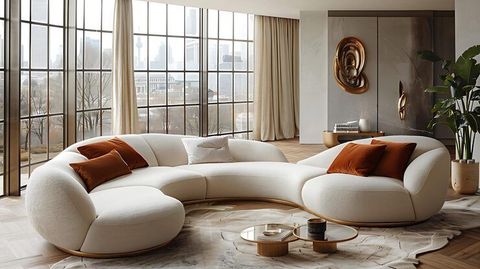
A Complete Guide to Customizable Sofa Combinations and Design Options
Updated: November 02, 2026
Read More