Discover the Latest Trends and Developments in Health Data Analytics
Health data analytics refers to the process of collecting, organizing, examining, and interpreting healthcare information to identify patterns and support better decisions. It combines data science, statistical analysis, artificial intelligence (AI), and healthcare information systems to transform large volumes of medical information into meaningful insights.
Healthcare organizations generate information through electronic health records (EHRs), laboratory reports, medical imaging, pharmacy systems, wearable devices, and patient monitoring technologies. Health data analytics helps bring these different information sources together for a clearer understanding of healthcare activities.
The process generally involves four major activities:
Data collection: Gathering information from hospitals, clinics, laboratories, medical devices, and digital health platforms.
Data processing: Organizing information, correcting errors, and preparing datasets for analysis.
Data analysis: Applying statistical methods, machine learning, and predictive analytics to identify patterns.
Data interpretation: Presenting findings through reports, dashboards, and visualizations that support informed decisions.
Main Types of Health Data Analytics
Healthcare analytics generally includes four major categories.
| Analytics Type | Main Purpose | Example |
|---|---|---|
| Descriptive analytics | Understand past events | Monthly hospital admission reports |
| Diagnostic analytics | Identify reasons behind events | Examining causes of increased readmissions |
| Predictive analytics | Estimate possible future outcomes | Predicting patient admission patterns |
| Prescriptive analytics | Evaluate possible actions | Supporting resource allocation decisions |
These categories work together to provide a broader understanding of healthcare performance and potential improvements.
Importance of Health Data Analytics Today
Improving Healthcare Decision-Making
Healthcare professionals regularly make decisions involving patient information, treatment outcomes, hospital resources, and medical procedures. Health data analytics helps organize relevant information so that decisions can be supported by measurable evidence.
For example, clinical data analytics can help identify patterns in laboratory results, patient histories, and treatment outcomes. Medical professionals can use these insights alongside clinical expertise when evaluating different healthcare situations.
Supporting Predictive Healthcare
Predictive analytics in healthcare uses historical information and statistical models to estimate potential future events.
Common applications include:
Identifying patients who may require additional monitoring.
Estimating hospital admission patterns.
Examining the likelihood of certain complications.
Understanding disease trends across different populations.
Supporting preventive healthcare planning.
Predictions are not guarantees. Their accuracy depends on data quality, model design, and the population being examined.
Strengthening Population Health Management
Population health analytics examines healthcare information across groups of people rather than focusing exclusively on individual patients.
Public health organizations can use this approach to understand disease distribution, vaccination patterns, regional health differences, and changes in healthcare demand.
It can also help identify communities that may experience limited healthcare availability or higher rates of particular health conditions.
Improving Hospital Operations
Healthcare business intelligence helps administrators understand operational performance through measurable indicators.
Examples include:
Hospital bed occupancy rates.
Average patient waiting periods.
Emergency department activity.
Staff scheduling patterns.
Medical equipment utilization.
Patient readmission rates.
These insights can support better planning and more effective resource management.
Supporting Medical Research
Medical researchers use large datasets to investigate diseases, examine treatment outcomes, and understand population-level health patterns.
Clinical research analytics can also support clinical trial planning, patient group analysis, and the evaluation of medical interventions.
However, research findings must be evaluated carefully, particularly when datasets contain missing information or represent only a limited population.
Recent Developments and Emerging Trends
Artificial Intelligence in Healthcare Analytics
During 2025 and 2026, artificial intelligence continued to influence healthcare data analysis. Machine learning models and advanced data processing techniques are increasingly being explored for medical research, clinical decision support, and operational planning.
AI-based healthcare analytics can examine large datasets and identify relationships that may be difficult to recognize through traditional reporting methods.
However, healthcare organizations must consider model accuracy, transparency, patient privacy, and the possibility of biased results.
Expansion of Healthcare Data Interoperability
Interoperability allows different healthcare information systems to exchange and interpret information consistently.
The Fast Healthcare Interoperability Resources (FHIR) standard remains important in this area. It supports structured information exchange between compatible healthcare applications.
Greater interoperability can help reduce fragmented medical records and improve coordination between healthcare institutions.
Growth of Wearable Health Technology
Wearable devices are generating additional health information through activity tracking, heart rate monitoring, sleep measurements, and other physiological observations.
When appropriately validated and interpreted, these datasets can contribute to population health research and personal health monitoring.
Nevertheless, wearable measurements should not automatically be treated as equivalent to clinical diagnostic results.
European Health Data Space Developments
The European Union's European Health Data Space (EHDS) Regulation entered into force on 26 March 2025. It establishes a framework for electronic health data exchange and controlled secondary use of health information for research, innovation, and policymaking.
Its implementation is phased, with important provisions beginning in 2027 and further milestones scheduled for 2029 and 2031.
Health AI Initiatives in India
On 17 February 2026, India's Ministry of Health and Family Welfare announced the launch of two initiatives:
SAHI: Strategy for Artificial Intelligence in Healthcare for India, intended to guide responsible and ethical AI adoption.
BODH: Benchmarking Open Data Platform for Health AI, designed to support privacy-preserving evaluation of healthcare AI models.
These initiatives reflect growing attention to responsible AI development and healthcare data governance.
Laws, Regulations, and Healthcare Data Policies
Health data analytics involves sensitive personal information. Therefore, healthcare organizations must follow applicable privacy, cybersecurity, data governance, and research regulations.
Requirements differ depending on the country, the type of information collected, and how the information is processed.
United States: HIPAA
The Health Insurance Portability and Accountability Act (HIPAA) establishes national standards for protecting certain individually identifiable health information.
Its Privacy Rule regulates the use and disclosure of protected health information, while its Security Rule establishes safeguards for electronic protected health information.
Healthcare analytics activities involving protected health information must consider:
Appropriate access controls.
Data security and confidentiality.
Permitted information disclosures.
Administrative and technical safeguards.
Business associate responsibilities, where applicable.
European Union: GDPR and EHDS
The General Data Protection Regulation (GDPR) provides privacy protections for personal information, including health-related data.
Health information is generally classified as a special category of personal data under GDPR. Processing requires an applicable legal basis and a relevant condition under the regulation.
The European Health Data Space Regulation adds specific arrangements for electronic health data exchange and secondary data use.
India: DPDP Act and Digital Health Policies
India's Digital Personal Data Protection Act, 2023, together with the Digital Personal Data Protection Rules, 2025, establishes a framework for processing digital personal data.
The Rules were notified in November 2025 and provide requirements concerning areas such as notices, consent, security safeguards, and individual rights, subject to their phased commencement provisions.
The Ayushman Bharat Digital Mission (ABDM) also supports the development of an interconnected digital health ecosystem.
Its framework includes:
Digital health identification.
Electronic health record interoperability.
Standardized health information exchange.
Consent-based health information sharing.
Healthcare institutions should review the applicable commencement dates and sector-specific requirements before implementing analytics systems.
Tools and Resources for Health Data Analytics
Healthcare analytics involves several types of software, programming technologies, statistical platforms, and data management frameworks.
Healthcare Analytics Platforms
| Tool or Platform | Main Application |
|---|---|
| Microsoft Power BI | Healthcare dashboards and business intelligence |
| Tableau | Medical data visualization and reporting |
| SAS Health Analytics | Statistical analysis and healthcare intelligence |
| IBM Cognos Analytics | Enterprise reporting and data analysis |
| Qlik Sense | Interactive healthcare data exploration |
| Google Cloud Healthcare API | Healthcare data integration and management |
Programming and Data Analysis Technologies
Python: Widely used for statistical analysis, machine learning, data preparation, and predictive healthcare models. Libraries such as Pandas, NumPy, and Scikit-learn support different analytical activities.
R Programming: Used for statistical computing, epidemiological research, clinical data analysis, and medical visualization.
SQL: Helps analysts retrieve, organize, and examine information stored in healthcare databases.
Apache Spark: Supports large-scale data processing and distributed analytics.
Healthcare Data Standards and Frameworks
HL7 FHIR: Supports standardized electronic healthcare information exchange.
DICOM: Provides standards for medical imaging information and communication.
ICD-10: Provides an internationally recognized classification system for diseases and health conditions.
LOINC: Supports standardized identification of laboratory and clinical observations.
SNOMED CT: Provides standardized clinical terminology for healthcare information systems.
Important Healthcare Analytics Metrics
Healthcare organizations can monitor several indicators to understand performance.
| Metric | What It Measures |
|---|---|
| Patient readmission rate | Frequency of patients returning after discharge |
| Average length of stay | Average duration of hospital admissions |
| Bed occupancy rate | Proportion of available beds being used |
| Patient satisfaction | Reported patient experience |
| Diagnostic turnaround time | Time required to complete diagnostic processes |
| Treatment outcome rate | Measured results following medical interventions |
These indicators should be interpreted within their clinical and operational context rather than used as isolated measures of healthcare quality.
Frequently Asked Questions
What Is the Main Purpose of Health Data Analytics?
Its main purpose is to transform healthcare information into meaningful insights. These insights can support clinical decision-making, medical research, hospital planning, disease monitoring, and public health management.
What Are the Four Types of Healthcare Analytics?
The four main types are descriptive, diagnostic, predictive, and prescriptive analytics. They examine past performance, investigate causes, estimate future outcomes, and evaluate possible actions.
Which Technologies Are Used in Health Data Analytics?
Common technologies include artificial intelligence, machine learning, Python, R, SQL, cloud computing, electronic health records, and business intelligence platforms such as Power BI and Tableau.
How Does Health Data Analytics Protect Patient Information?
Healthcare organizations use encryption, access controls, data minimization, anonymization or pseudonymization, audit records, and appropriate governance procedures. The exact requirements depend on applicable privacy regulations and the intended use of the information.
What Is the Future of Health Data Analytics?
Future developments are expected to involve more advanced predictive models, interoperable electronic health records, wearable technology, real-time data processing, and responsible AI applications. Greater emphasis will also be placed on data quality, transparency, privacy, and reliable clinical validation.
Conclusion
Health data analytics is becoming an important part of modern healthcare infrastructure. By combining medical information, statistical analysis, artificial intelligence, and data visualization, it helps healthcare organizations understand clinical patterns, monitor operational performance, and support evidence-based decisions.
Developments in predictive analytics, electronic health records, healthcare interoperability, and AI are expanding the possibilities for medical research and population health management.
At the same time, reliable analytics depends on accurate information, appropriate interpretation, strong cybersecurity, and compliance with relevant privacy regulations.
As healthcare systems continue to become more digitally connected, health data analytics will remain an important area for improving information management, supporting medical research, and understanding healthcare outcomes.
Disclaimer: The information provided in this article is for informational purposes only. We do not make any claims or guarantees regarding the accuracy, reliability, or completeness of the information presented. The content is not intended as professional advice and should not be relied upon as such. Readers are encouraged to conduct their own research and consult with appropriate professionals before making any decisions based on the information provided in this article.

Related Post...
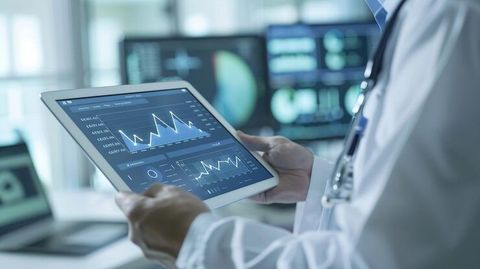
Discover the Latest Trends and Developments in Health Data Analytics
Updated: November 03, 2026
Read More
Explore Body Mass Index (BMI): Meaning, Calculation and Health Insights
Updated: November 02, 2026
Read More