Explore Body Mass Index (BMI): Meaning, Calculation and Health Insights
Body Mass Index (BMI) is a widely used measurement that helps assess the relationship between a person's weight and height. It provides a numerical value that can help identify whether an adult's weight falls within a general category, such as underweight, healthy weight, overweight or obesity. Healthcare professionals use BMI as an initial screening measure when evaluating weight-related health risks.
Understanding BMI is important because body weight can influence several aspects of physical health, including heart function, blood sugar regulation and joint health. However, BMI does not provide a complete picture of an individual's health. Other factors, such as muscle mass, body composition, age, waist measurement and medical history, are also important.
Understanding Body Mass Index and Its Calculation
What Is Body Mass Index?
Body Mass Index is a numerical measurement calculated using a person's weight and height. It was developed as a practical method for examining weight patterns across populations and identifying groups that may have an increased risk of certain health conditions.
BMI is expressed in kilograms per square metre (kg/m²). It provides a standardized measurement that allows healthcare professionals and researchers to compare weight categories using a consistent formula.
The BMI calculation is relatively simple and requires two measurements:
Body weight measured in kilograms.
Height measured in metres.
How Is BMI Calculated?
The standard BMI formula divides body weight by the square of height.
BMI Formula:
BMI = Weight (kg) ÷ Height (m)²
For example, consider an adult who weighs 70 kilograms and has a height of 1.75 metres.
BMI = 70 ÷ (1.75 × 1.75)
BMI = 22.86 kg/m²
This result falls within the standard healthy weight category for adults.
Accurate measurements are important for obtaining a meaningful result. Weight should ideally be measured using a reliable weighing scale, while height should be measured without footwear.
Understanding Standard BMI Categories
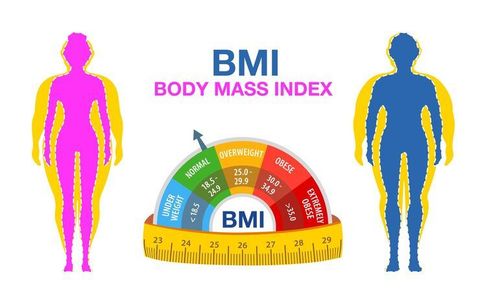
Adult BMI results are commonly divided into several categories. These categories help identify general weight patterns rather than provide a complete medical diagnosis.
BMI Range (kg/m²) | Weight Category |
|---|---|
Below 18.5 | Underweight |
18.5–24.9 | Healthy weight |
25.0–29.9 | Overweight |
30.0–34.9 | Obesity Class I |
35.0–39.9 | Obesity Class II |
40.0 or above | Obesity Class III |
These are commonly used international adult BMI classifications. Some healthcare guidelines use different thresholds for certain populations, particularly people of Asian backgrounds.
What Does a BMI Result Indicate?
A BMI result offers an initial indication of weight-related health patterns.
Underweight: May indicate insufficient body weight relative to height and can be associated with nutritional deficiencies or other health concerns.
Healthy weight: Falls within the standard reference range, although it does not automatically indicate that every aspect of health is optimal.
Overweight: Indicates a higher weight relative to height and may warrant additional assessment of body composition and metabolic health.
Obesity: Indicates a higher BMI category associated with increased risk of several chronic health conditions.
BMI results should always be interpreted alongside other relevant health measurements.
Why BMI Matters for Modern Health Assessment
Identifying Potential Health Risks
BMI is frequently used in population health research and routine medical assessments because it provides a convenient starting point for evaluating weight-related health patterns.
Higher BMI levels are associated with an increased likelihood of developing certain health conditions, including:
Type 2 diabetes.
High blood pressure.
Cardiovascular disease.
Sleep-related breathing disorders.
Certain types of joint problems.
Some forms of cancer.
However, these associations do not mean that everyone with a higher BMI will develop these conditions. Individual risk depends on several biological, lifestyle and environmental factors.
Understanding the Importance of Waist Measurement
Body fat distribution can influence health risks independently of total body weight. In particular, excess abdominal fat may be associated with metabolic and cardiovascular concerns.
Waist circumference and waist-to-height ratio can provide additional information when interpreting BMI.
A commonly used waist-to-height guideline is to keep waist circumference below half of total height.
For example, an adult measuring 170 centimetres in height can use 85 centimetres as a simple reference point for this measurement.
Who Can Benefit From BMI Assessment?
BMI can be useful for several groups:
Adults interested in understanding general weight categories.
Healthcare professionals conducting routine health assessments.
Researchers studying population-level obesity trends.
Public health organizations monitoring nutritional patterns.
Individuals tracking changes in weight over time.
Limitations of BMI
Although BMI is useful, it has several limitations that should be considered.
Muscle mass: People with higher muscle mass may have a higher BMI without having excessive body fat.
Age: Body composition changes throughout adulthood, which can influence how BMI should be interpreted.
Pregnancy: Standard adult BMI classifications are not designed to assess weight changes during pregnancy.
Body fat distribution: BMI cannot distinguish abdominal fat from fat stored in other areas.
Individual differences: Ethnicity, genetics and medical conditions can influence the relationship between BMI and health risks.
For these reasons, BMI should be treated as one part of a broader health assessment.
Recent Developments in BMI Research and Health Guidelines
Updated Obesity Assessment Approaches in 2025
In January 2025, the UK's National Institute for Health and Care Excellence (NICE) published updated guidance on overweight, obesity and central adiposity.
The guidance highlighted the importance of considering waist-to-height ratio alongside BMI when assessing central body fat. It also addressed differences in BMI interpretation across population groups.
In August 2025, NICE updated its related quality standards, further supporting consistent approaches to obesity assessment and management.
WHO Guidance on Obesity Management in 2025
On 1 December 2025, the World Health Organization (WHO) issued its first global guideline addressing the use of GLP-1 therapies for treating obesity in adults.
The recommendations conditionally supported their use for long-term obesity management in adults, excluding pregnant women. WHO also emphasized the importance of combining appropriate medical treatment with structured behavioural interventions, including healthy eating and physical activity.
This development reflects a broader approach to obesity that considers long-term health management rather than relying exclusively on BMI measurements.
New Clinical Assessment Standards in 2026
In June 2026, the American Diabetes Association's Obesity Association published updated standards for screening, diagnosis, evaluation and staging of obesity in adults.
The recommendations emphasized several assessment methods:
Regular monitoring of body weight changes.
BMI screening at least annually for adults.
Additional waist circumference or waist-to-height measurements where appropriate.
Consideration of ethnicity-specific BMI thresholds.
Comprehensive clinical evaluation rather than relying exclusively on BMI.
For adults of Asian backgrounds, the updated standards identify BMI of 23 kg/m² as a threshold for screening for excess adiposity and 27.5 kg/m² as an obesity threshold. Additional waist measurements can help refine the assessment.
These developments demonstrate the growing importance of personalized and comprehensive obesity assessment.
Laws, Public Health Policies and BMI Guidelines
International Health Recommendations
BMI is used internationally as a population health measurement. However, there is no single worldwide law that establishes one mandatory BMI threshold for every individual.
Organizations such as WHO publish recommendations and technical guidance that governments and healthcare institutions can use when developing national health policies.
These recommendations commonly support:
Monitoring overweight and obesity trends.
Encouraging balanced nutrition.
Promoting regular physical activity.
Improving access to preventive health assessments.
Supporting research into non-communicable diseases.
Individual countries may adopt different clinical guidelines according to their population characteristics and healthcare priorities.
BMI Guidelines and Public Health in India
In India, BMI assessment is relevant to national efforts addressing non-communicable diseases, including diabetes, hypertension and cardiovascular conditions.
The National Programme for Prevention and Control of Non-Communicable Diseases (NP-NCD) supports screening, early identification and management of major chronic health conditions through public healthcare systems.
Indian health assessments also need to consider the increased metabolic risks that can occur at lower BMI levels among Asian populations.
Commonly referenced Asian adult BMI thresholds include:
Below 18.5: Underweight.
18.5–22.9: Normal range.
23.0–24.9: Overweight.
25.0–29.9: Obesity Class I.
30.0 or above: Obesity Class II.
These categories are used in certain Asian and Indian clinical frameworks and should not be confused with the standard international BMI classification.
Healthcare Screening and Data Privacy
BMI measurements may be recorded as part of routine medical assessments, workplace wellness programmes or public health research.
Healthcare institutions should follow applicable privacy, medical-record and data-protection requirements when collecting personal health information.
In India, the Digital Personal Data Protection Act, 2023, forms part of the country's developing framework for personal data protection. Its applicable provisions and implementation requirements should be considered when handling digital health information.
BMI screening should also respect individual privacy and avoid discrimination or stigmatization based on body weight.
Helpful BMI Tools and Health Resources
Several digital tools and educational resources can help people understand BMI calculations, weight categories and general health measurements.
Online BMI Calculators
BMI calculators allow users to enter their weight and height to calculate their BMI automatically.
Common features include:
Metric and imperial measurement options.
Automatic BMI calculation.
Standard adult BMI classifications.
Basic weight-category explanations.
Historical measurement tracking.
Health and Fitness Applications
Digital health applications can help individuals monitor different aspects of their health.
Useful features may include:
Weight tracking.
Daily physical activity records.
Exercise monitoring.
Nutrition tracking.
Sleep pattern monitoring.
Personal health progress reports.
These applications can provide useful information, but their measurements should not replace professional medical assessments.
Government and Medical Resources
The following organizations provide educational information and clinical guidance related to BMI and weight management.
Organization | Main Resource Area |
|---|---|
World Health Organization (WHO) | Global obesity and health guidelines |
Centers for Disease Control and Prevention (CDC) | Adult and child BMI information |
National Institute for Health and Care Excellence (NICE) | Obesity assessment and clinical guidance |
American Diabetes Association (ADA) | Obesity and metabolic health standards |
Indian Ministry of Health and Family Welfare | National health programmes |
Additional Health Measurements
BMI becomes more informative when combined with other measurements.
Measurement | What It Evaluates |
|---|---|
Waist circumference | Abdominal fat distribution |
Waist-to-height ratio | Relative abdominal measurement |
Blood pressure | Cardiovascular health indicator |
Blood glucose | Blood sugar regulation |
Lipid profile | Cholesterol and triglyceride levels |
Body composition | Relative fat and lean tissue |
Combining these measurements can provide a broader understanding of an individual's health status.
Frequently Asked Questions About Body Mass Index
What Is a Healthy BMI Range for Adults?
The commonly used international healthy BMI range for adults is 18.5–24.9 kg/m². However, some Asian clinical guidelines use lower thresholds because metabolic health risks may develop at lower BMI levels in these populations.
How Can I Calculate My BMI at Home?
You can calculate BMI by dividing your weight in kilograms by your height in metres squared. For example, a person weighing 65 kilograms with a height of 1.65 metres has a BMI of approximately 23.9.
Is BMI an Accurate Measurement of Body Fat?
BMI is a useful screening measurement, but it does not directly measure body fat. It cannot distinguish between muscle, bone and fat. Waist circumference and body composition assessments can provide additional information.
Does BMI Differ for Men and Women?
The standard adult BMI calculation and general classification ranges are the same for men and women. However, body composition and fat distribution can differ, so additional measurements may be important when evaluating individual health risks.
Should Children Use Adult BMI Categories?
No. Children and teenagers should not be assessed using standard adult BMI categories. Their BMI is interpreted according to age and sex-specific growth charts because body composition changes during development.
Conclusion
Body Mass Index is an important measurement for understanding general weight categories and identifying potential weight-related health risks. Its simple calculation makes it useful in individual health assessments, medical research and public health monitoring.
However, BMI should not be considered a complete measure of health or body composition. Waist circumference, physical activity, nutrition, blood pressure, blood glucose and individual medical history can all contribute to a more comprehensive assessment.
Recent developments in international health guidelines also demonstrate a growing emphasis on personalized obesity assessment, population-specific BMI thresholds and additional measurements of abdominal fat.
Understanding how BMI works, what its categories indicate and where its limitations exist can help individuals make more informed decisions about general health and long-term well-being.
Disclaimer: The information provided in this article is for informational purposes only. We do not make any claims or guarantees regarding the accuracy, reliability, or completeness of the information presented. The content is not intended as professional advice and should not be relied upon as such. Readers are encouraged to conduct their own research and consult with appropriate professionals before making any decisions based on the information provided in this article.

Related Post...

Fitness Trackers and Gadgets: Key Insights Into Modern Wearable Technology
Updated: November 02, 2026
Read More
Explore Essilor Lenses: Advanced Technology for Clear Vision and Eye Protection
Updated: October 30, 2026
Read More
Dental Sealants Basics: Understanding Types, Uses, and Long-Term Protection
Updated: October 29, 2026
Read More