Beginner’s Guide to Inverter Welding Machines and Their Working Principles
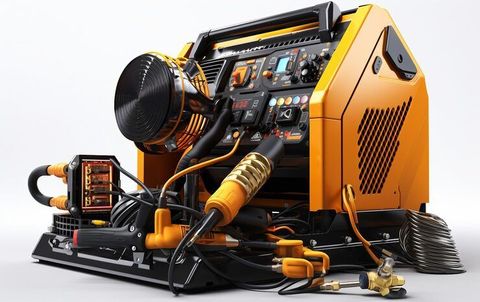
Inverter welding machines are modern electrical devices designed to generate the controlled current required for joining metal components. They use advanced electronic circuits to convert incoming electrical power into a suitable welding output. Unlike traditional transformer-based welding equipment, inverter technology operates at higher frequencies, allowing manufacturers to develop compact and lightweight machines with precise current control.
These machines are widely used in metal fabrication, automotive manufacturing, construction, shipbuilding, industrial maintenance, and engineering workshops. Their ability to regulate welding parameters makes them suitable for different materials, metal thicknesses, and welding applications.
An inverter welding machine generally consists of several important components:
Rectifier: Converts incoming alternating current (AC) into direct current (DC).
Inverter circuit: Uses electronic switching components to increase the operating frequency.
Transformer: Adjusts the electrical voltage to the required level.
Output rectifier: Converts electrical power into the required welding current.
Control system: Regulates current, voltage, and other welding parameters.
Cooling system: Helps control internal temperatures during operation.
Common inverter welding technologies include Metal Inert Gas (MIG), Tungsten Inert Gas (TIG), and Shielded Metal Arc Welding (SMAW). Each process serves different industrial requirements and material conditions.
Why Inverter Welding Technology Matters Today
Metal fabrication industries increasingly require accurate welding, consistent production quality, and improved electrical efficiency. Inverter welding technology addresses several of these requirements through electronic power regulation and advanced control systems.
Its importance extends beyond large manufacturing facilities. Small workshops, construction contractors, automotive manufacturers, agricultural equipment producers, and infrastructure developers also use inverter-based welding equipment.
Energy Efficiency and Electrical Performance
Traditional welding transformers can be relatively large and heavy. Inverter systems use high-frequency switching technology, which allows smaller transformer designs and more flexible electrical control.
Important performance considerations include:
Input power requirements and electrical consumption.
Power factor and electrical efficiency.
Welding current stability.
Duty cycle and continuous operating capacity.
Heat generation and cooling requirements.
Precision in Metal Fabrication
Accurate current regulation helps maintain consistent welding conditions. This is particularly important when working with thin metal sheets, stainless steel, aluminium, and structural steel.
Portability and Workplace Flexibility
Many inverter welding machines have compact designs. Their reduced weight can make transportation and positioning easier in construction environments, maintenance workshops, and field fabrication activities.
Industrial Applications
Common applications include:
Automotive body manufacturing and component fabrication.
Structural steel fabrication and infrastructure development.
Agricultural machinery production.
Industrial piping and pipeline construction.
Shipbuilding and metal structure manufacturing.
Stainless steel equipment fabrication.
General engineering and metalworking.
Recent Technological Developments in Inverter Welding Machines
Developments during 2025 and 2026 have continued to influence welding equipment design, electrical safety, and industrial performance. Manufacturers and standards organizations are paying increasing attention to digital control, battery-powered equipment, electromagnetic compatibility, and periodic electrical inspection.
Digital Welding Control Systems
Modern inverter welding machines increasingly incorporate digital control circuits and microprocessor-based systems. These technologies help regulate welding parameters and support repeatable operating conditions.
Common developments include:
Digital displays for current and voltage monitoring.
Programmable welding parameters.
Improved arc-starting functions.
Automatic adjustment of selected welding characteristics.
Thermal overload protection and fault indicators.
IGBT-Based Inverter Technology
Insulated Gate Bipolar Transistor (IGBT) technology remains an important part of modern inverter welding equipment. These semiconductor components support high-frequency electrical switching and controlled power conversion.
Developments in electronic switching components contribute to improvements in equipment design, thermal management, and power regulation.
Battery-Powered Welding Equipment
Portable electrical systems are receiving greater attention across industrial applications. Battery-powered welding equipment requires particular consideration of battery capacity, charging arrangements, electrical protection, and operating limitations.
The IEC's updated electromagnetic compatibility requirements also address battery-powered equipment and related charging systems.
Important Standards Developments in 2025
In June 2025, the International Electrotechnical Commission (IEC) published IEC 60974-4:2025, covering periodic inspection and testing of arc welding equipment.
The standard provides procedures for checking electrical safety during maintenance and after repairs. It also introduces additional information concerning battery-powered welding equipment and connected chargers.
Developments in 2026
On August 14, 2026, IEC published the consolidated IEC 60974-10:2020+AMD1:2026 edition. It addresses electromagnetic compatibility requirements for arc welding equipment, including battery-powered equipment and systems incorporating radio transmitters or receivers.
These developments demonstrate the growing importance of electrical safety, equipment compatibility, and inspection procedures in modern welding environments.
Laws, Regulations and Industrial Safety Standards
Inverter welding machines are electrical industrial equipment, so their design, manufacturing, installation, and workplace operation may be affected by different national regulations.
Requirements vary according to the country, equipment classification, electrical specifications, and intended application.
International Electrotechnical Commission Standards
IEC 60974 is an important international standards series covering arc welding equipment.
Relevant standards include:
Standard | Main subject |
|---|---|
IEC 60974-1 | Welding power source safety and performance |
IEC 60974-4 | Periodic inspection and electrical testing |
IEC 60974-10 | Electromagnetic compatibility |
IEC 60974-6 | Limited-duty arc welding power sources |
These standards help establish technical requirements for welding equipment and support electrical safety assessments.
United States: OSHA Workplace Regulations
The Occupational Safety and Health Administration (OSHA) establishes workplace requirements covering welding, cutting, and brazing.
Relevant regulations include:
29 CFR 1910.252: General welding, cutting, and brazing requirements.
29 CFR 1910.254: Arc welding and cutting.
29 CFR 1926.351: Arc welding and cutting in construction.
29 CFR 1926.353: Ventilation and protection during welding activities.
These provisions address workplace protection, electrical safety, ventilation, and exposure to welding hazards.
European Union: Electrical and Environmental Requirements
European electrical equipment regulations include the Low Voltage Directive (2014/35/EU), where applicable to equipment within its specified voltage range.
Electromagnetic compatibility requirements are also relevant. In addition, Commission Regulation (EU) 2019/1784 establishes ecodesign requirements for welding equipment within its scope.
India: BIS Standards and Machinery Safety
In India, the Bureau of Indian Standards (BIS) provides national standards for electrical and industrial equipment.
IS 16593 (Part 1):2021, based on IEC 60974-1:2017, addresses arc welding equipment and welding power sources. BIS announced the grant of an All India First License under this standard on May 30, 2024.
Additionally, the Machinery and Electrical Equipment Safety (Omnibus Technical Regulation) Amendment Order, 2025, published on August 19, 2025, specified September 1, 2026, as the application date for listed machinery and electrical equipment covered by the order. Its applicability depends on the relevant product classification and schedule.
Manufacturers, importers, and industrial operators should verify the applicable national requirements before manufacturing, importing, or operating specific equipment.
Tools and Resources for Welding Equipment Research
Understanding inverter welding machines involves examining electrical specifications, material compatibility, welding procedures, and workplace safety. Several technical resources can help engineers, manufacturers, and workshop operators evaluate equipment.
Useful Technical Tools
Welding Current Calculator: Helps estimate suitable welding current according to electrode diameter, material thickness, and welding process.
Duty Cycle Calculator: Helps understand operating time and cooling intervals based on the machine's rated duty cycle.
Power Consumption Calculator: Estimates electrical energy consumption using input power and operating duration.
Welding Parameter Charts: Provide reference information for current, voltage, wire feed speed, and material thickness.
Electrical Multimeter: Helps assess electrical parameters during appropriate inspection procedures.
Thermal Monitoring Instruments: Help identify excessive heat around equipment and electrical components.
Industry Websites and Reference Materials
Resource | Main purpose |
|---|---|
International Electrotechnical Commission (IEC) | International electrical standards |
American Welding Society (AWS) | Welding standards and technical education |
Bureau of Indian Standards (BIS) | Indian technical and safety standards |
Occupational Safety and Health Administration (OSHA) | Workplace welding safety |
TWI Global | Welding processes and engineering knowledge |
European Commission | European electrical and environmental regulations |
These resources help users understand equipment specifications, technical requirements, welding procedures, and workplace protection.
Frequently Asked Questions About Inverter Welding Machines
1. What is an inverter welding machine?
An inverter welding machine is an electronic welding power source that converts incoming electrical power into controlled welding current. It uses high-frequency switching technology to regulate output power and support different welding processes.
2. What is the difference between inverter and transformer welding machines?
Traditional transformer welding machines generally operate at mains frequency and use larger transformers. Inverter machines use electronic switching at higher frequencies, allowing more compact designs, lighter equipment, and advanced current regulation.
3. Which welding processes can inverter machines support?
Depending on their design, inverter machines can support:
Shielded Metal Arc Welding (SMAW).
Metal Inert Gas (MIG) welding.
Tungsten Inert Gas (TIG) welding.
Flux-Cored Arc Welding (FCAW).
Not every inverter machine supports all these processes. Compatibility depends on the equipment configuration.
4. What does duty cycle mean in inverter welding equipment?
Duty cycle describes how long a welding machine can operate within a specified period at a particular output level without exceeding its thermal limits.
For example, a 60% duty cycle over a 10-minute reference period generally means six minutes of welding followed by four minutes of cooling under the stated test conditions.
5. What safety precautions are necessary when operating inverter welding machines?
Important precautions include:
Wearing an appropriate welding helmet and protective clothing.
Using suitable gloves and eye protection.
Maintaining adequate ventilation.
Checking electrical connections and grounding arrangements.
Keeping the equipment away from excessive moisture.
Inspecting cables, electrode holders, and connectors.
Following the manufacturer's operating instructions.
Conclusion
Inverter welding machines have become an important part of modern metal fabrication and industrial manufacturing. Their electronic power conversion technology supports compact equipment designs, controlled welding current, and flexible applications across different industries.
Developments in digital controls, semiconductor components, battery-powered systems, and electrical inspection standards continue to influence this technology. At the same time, international standards and national workplace regulations remain important for ensuring safe equipment design and operation.
Understanding welding processes, duty cycles, electrical requirements, and applicable safety standards helps engineers, manufacturers, and industrial operators make informed technical decisions. As manufacturing requirements continue to evolve, inverter welding technology is expected to remain an important component of industrial fabrication and metalworking.

Related Post...
Seed Drills Guide: Understanding Features, Mechanisms, and Agricultural Uses
Updated: October 29, 2026
Read More
Air Jet Looms Explained: Tips for Understanding Modern Textile Weaving Technology
Updated: October 29, 2026
Read More
Tips for Choosing the Right Portable Welding Units for Different Projects
Updated: October 30, 2026
Read More