Tips for Choosing the Right Portable Welding Units for Different Projects
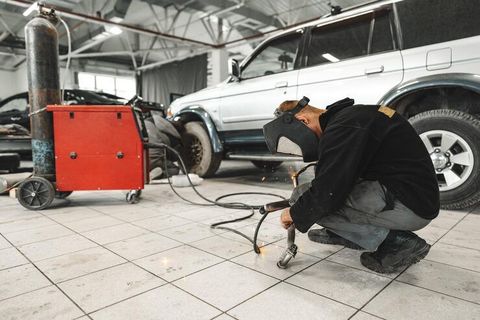
Portable welding units are compact welding machines designed to perform metal-joining operations at different locations. Unlike traditional stationary welding systems, these machines can be transported between workshops, construction sites, industrial facilities, agricultural locations and maintenance areas.
They provide electrical power to generate the heat required to join metal components. Depending on the equipment design, portable welding systems can support processes such as Shielded Metal Arc Welding (SMAW), Gas Metal Arc Welding (GMAW), Gas Tungsten Arc Welding (GTAW) and Flux-Cored Arc Welding (FCAW).
Portable welding technology has developed considerably through the introduction of inverter-based power supplies, digital controls and lightweight electrical components. These developments have made modern welding equipment more compact while providing greater control over welding parameters.
Main Types of Portable Welding Units
Different portable welding machines are designed for particular materials, applications and operating environments.
Portable Stick Welders: Also known as SMAW machines, these units use coated electrodes and are commonly used for structural steel, repairs and outdoor metal fabrication.
Portable MIG Welders: Metal Inert Gas welding equipment uses a continuously fed wire electrode and shielding gas. It is frequently used for sheet metal, automotive fabrication and industrial production.
Portable TIG Welders: Tungsten Inert Gas systems provide precise heat control and are suitable for stainless steel, aluminium and other applications requiring controlled weld quality.
Portable Multi-Process Welders: These machines combine multiple welding processes in one unit, allowing operators to work with different materials and fabrication requirements.
Battery-Powered Welding Units: These systems use rechargeable battery technology to support welding operations in locations where conventional electrical connections are limited.
Engine-Driven Welding Units: These machines use an integrated engine and generator to provide electrical power in remote industrial, agricultural and construction environments.
How Portable Welding Equipment Works
Most portable electric welding machines convert incoming electrical power into a controlled welding current.
The general operating process includes:
Electrical power enters the welding machine through a compatible power source.
The internal power electronics regulate voltage and current.
Welding cables transfer electrical energy to the electrode or torch.
An electric arc generates sufficient heat to melt the base material.
The molten metal cools and forms a joint.
Inverter welding technology uses electronic switching components to regulate electrical power. This approach allows manufacturers to develop smaller and lighter machines than many traditional transformer-based designs.
Importance of Portable Welding Technology
Why Portable Welding Units Matter Today
Portable welding equipment plays an important role in industries where metal structures, machinery and components require assembly or maintenance at their installation locations.
Transporting large stationary welding systems is not always practical. Portable units address this limitation by bringing welding capabilities closer to the required operation.
Several industries depend on these systems:
Construction: Joining structural steel, reinforcing components, metal frameworks and industrial structures.
Automotive Manufacturing: Supporting vehicle body fabrication, metal component assembly and repair operations.
Agriculture: Maintaining metal equipment, trailers, machinery frames and farming infrastructure.
Shipbuilding: Performing welding operations on metal structures and marine equipment.
Manufacturing: Supporting fabrication activities involving metal enclosures, frames, brackets and machinery components.
Energy Infrastructure: Supporting fabrication and maintenance activities involving pipelines, power facilities and industrial structures.
Advantages of Portable Welding Systems
Modern portable welding units provide several practical advantages.
Mobility: Compact designs make it easier to transport equipment between different operating locations.
Operational Flexibility: Multi-process machines can accommodate different welding techniques without requiring several independent machines.
Power Efficiency: Inverter-based systems regulate electrical output through electronic components, helping improve power conversion efficiency.
Space Utilization: Smaller equipment designs require less storage space in workshops and industrial facilities.
Digital Control: Adjustable current settings, digital displays and programmed welding parameters help operators maintain consistent operating conditions.
Important Technical Specifications
Selecting an appropriate portable welding machine requires an understanding of its technical characteristics.
| Specification | What It Indicates |
|---|---|
| Input Voltage | Electrical supply required by the machine |
| Output Current | Available welding current, measured in amperes |
| Duty Cycle | Percentage of a 10-minute period the machine can operate at a specified output |
| Open-Circuit Voltage | Voltage measured across the output terminals when not welding |
| Rated Power | Electrical power requirements during operation |
| Electrode Compatibility | Supported electrode sizes and types |
| Protection Rating | Resistance against specified environmental conditions |
| Weight | Equipment portability and handling requirements |
Understanding Welding Duty Cycle
Duty cycle is particularly important when evaluating portable welding power sources. It indicates how long a machine can operate within a standard 10-minute period at a specified output.
| Duty Cycle | Welding Time | Cooling Time |
|---|---|---|
| 20% | 2 minutes | 8 minutes |
| 30% | 3 minutes | 7 minutes |
| 40% | 4 minutes | 6 minutes |
| 60% | 6 minutes | 4 minutes |
| 100% | 10 minutes | 0 minutes |
These examples illustrate the relationship between operating time and cooling time. Actual performance depends on the rated current, ambient temperature and manufacturer's specifications.
Recent Updates and Industry Developments
Advancements in Welding Equipment During 2025–2026
Portable welding technology continues to evolve through improvements in electrical components, battery systems, inspection procedures and equipment monitoring.
Several developments are particularly relevant to modern welding operations.
Battery-Powered Welding Equipment
Battery-powered welding systems are an emerging area of equipment development. They can support certain welding operations in locations where access to conventional electrical power is limited.
Battery capacity, charging requirements, output stability and thermal management remain important considerations. The suitability of these systems depends on the welding process and required operating duration.
Updated Electrical Safety Testing Standards
In June 2025, the International Electrotechnical Commission published IEC 60974-4:2025, the fourth edition of its standard covering periodic inspection and testing of arc welding equipment.
The updated edition includes additional guidance in Annex D concerning battery-powered welding power sources and their connected chargers. It also addresses electrical safety testing during maintenance and after equipment repair.
Developments in Electromagnetic Compatibility
On 14 August 2026, IEC published the consolidated IEC 60974-10:2020+AMD1:2026 edition covering electromagnetic compatibility requirements for arc welding equipment.
The updated requirements include provisions relating to battery-powered equipment and welding systems incorporating radio transmitters or receivers.
Digital Welding Controls
Digital displays, electronic current regulation and programmable operating settings continue to influence portable welding equipment design. These technologies can help operators monitor machine settings and maintain repeatable welding parameters.
Improved Equipment Monitoring
Modern welding systems increasingly incorporate thermal protection, overload indicators and electronic monitoring. These features help operators identify operating conditions that may affect equipment performance.
Laws, Policies and Welding Safety Regulations
International Welding Equipment Standards
Portable welding units are affected by electrical safety requirements, occupational health regulations, environmental rules and equipment certification standards.
The specific requirements depend on the country, equipment category and intended industrial application.
Important international standards include:
IEC 60974-1: Covers safety and performance requirements for arc welding power sources.
IEC 60974-4: Addresses periodic inspection and testing of arc welding equipment.
IEC 60974-10: Covers electromagnetic compatibility requirements for welding equipment.
ISO 17662:2025: Addresses calibration, verification and validation of equipment used for welding and related activities.
ISO 14732:2025: Covers qualification testing of welding operators and welding setters for mechanized and automatic welding.
These standards help establish technical expectations for equipment design, inspection and welding process control.
Welding Regulations in India
In India, portable welding equipment and industrial welding operations are influenced by national standards and workplace safety requirements.
Important regulatory considerations include:
Bureau of Indian Standards (BIS): BIS develops Indian Standards covering electrical welding equipment, construction requirements, testing procedures and safety considerations. IS 16593 is among the relevant standards associated with arc welding equipment.
Machinery and Electrical Equipment Safety: The Machinery and Electrical Equipment Safety (Omnibus Technical Regulation) Amendment Order, 2025, announced on 19 August 2025, revised the implementation timeline of the principal 2024 order. Its application to listed machinery and electrical equipment was specified from 1 September 2026, subject to the applicable product categories and provisions.
Factory and Workplace Safety: Industrial welding operations must follow applicable occupational safety requirements, including electrical protection, ventilation, fire prevention, appropriate protective equipment and safe handling of compressed gas cylinders.
Essential Welding Safety Practices
Operators should consider the following precautions:
Wear an appropriate welding helmet, protective gloves and flame-resistant clothing.
Use suitable eye protection against ultraviolet and infrared radiation.
Maintain proper ventilation to reduce exposure to welding fumes.
Keep combustible materials away from sparks and hot metal.
Inspect electrical cables, electrode holders and connections before operation.
Ensure that the electrical supply and grounding arrangements are appropriate.
Store gas cylinders securely and follow applicable handling procedures.
Use suitable fire extinguishing equipment in the operating area.
Regulatory requirements should always be checked against current national and local rules before equipment is introduced into an industrial environment.
Tools and Resources for Portable Welding Units
Useful Technical Tools
Several tools and resources help operators, engineers and fabrication professionals understand welding equipment specifications and improve process control.
Welding Parameter Calculators
Welding calculators help estimate operating parameters based on material thickness, electrode diameter, welding process and other technical requirements.
Common calculations include:
Welding current selection.
Voltage and wire-feed speed estimation.
Duty cycle calculations.
Electrical power consumption.
Welding heat input estimation.
Digital Welding Inspection Tools
Digital inspection instruments help evaluate equipment condition and welding quality.
Examples include:
Digital multimeters for electrical measurements.
Clamp meters for current measurements.
Insulation resistance testers for electrical safety checks.
Infrared thermometers for temperature monitoring.
Weld gauges for measuring weld dimensions and profiles.
Welding Design and Simulation Software
Computer-based engineering tools can help plan welding operations, assess joint designs and estimate manufacturing requirements.
Examples include:
Autodesk Fusion for mechanical design and fabrication planning.
SOLIDWORKS for 3D mechanical design and engineering documentation.
Simufact Welding for welding process simulation.
Lincoln Electric Weld Parameter Calculators for understanding welding settings.
Miller Weld Setting Calculators for estimating suitable welding parameters.
Important Equipment Selection Checklist
Before choosing a portable welding unit, operators and technical teams should evaluate several factors.
| Evaluation Area | Important Consideration |
|---|---|
| Welding Process | Stick, MIG, TIG or multi-process compatibility |
| Material | Carbon steel, stainless steel or aluminium |
| Electrical Supply | Single-phase or three-phase compatibility |
| Portability | Weight, dimensions and carrying arrangements |
| Duty Cycle | Required operating duration |
| Environment | Indoor, outdoor or industrial conditions |
| Safety | Thermal protection and electrical safeguards |
| Maintenance | Inspection intervals and component availability |
Using a structured evaluation process can help identify equipment that matches the intended welding application.
Frequently Asked Questions
What is a portable welding unit?
A portable welding unit is a compact machine that generates controlled electrical power for joining metal components. It is designed to be transported between different locations and is commonly used in construction, manufacturing, agriculture and industrial fabrication.
Which portable welding machine is suitable for general metal fabrication?
The appropriate machine depends on the material, thickness, welding position and required joint quality. Stick welding equipment is commonly used for structural steel and outdoor applications, while MIG equipment is frequently used for fabrication involving thinner materials and continuous welding operations.
How does inverter technology improve portable welding machines?
Inverter technology uses electronic power conversion to regulate welding current. It enables compact equipment designs and can provide improved electrical control, adjustable output settings and efficient power conversion compared with many conventional transformer-based designs.
Are battery-powered welding units suitable for industrial applications?
Battery-powered welding units can support selected industrial and field applications. Their suitability depends on battery capacity, output current, welding process, operating duration and charging arrangements. High-demand applications may still require conventional electrical or engine-driven power sources.
How frequently should portable welding equipment be inspected?
Inspection frequency depends on operating conditions, manufacturer recommendations and applicable regulations. Equipment should be checked before use for damaged cables, loose connections, overheating and other visible defects. Periodic electrical safety testing should also follow applicable standards, including IEC 60974-4 where relevant.
Conclusion
Portable welding units have become important equipment across modern construction, manufacturing, agriculture and industrial fabrication. Their compact designs, inverter-based power systems and flexible operating capabilities support welding activities in locations where stationary equipment may not be practical.
Technological developments during 2025 and 2026 have also brought greater attention to battery-powered welding systems, electrical safety testing and electromagnetic compatibility requirements. These developments highlight the importance of selecting equipment according to its intended application and maintaining appropriate inspection procedures.
Understanding welding processes, technical specifications, duty cycles and workplace regulations helps operators make informed equipment decisions. As industrial requirements continue to evolve, portable welding technology is expected to remain an important part of metal fabrication and field-based engineering operations.

Related Post...

Seed Drills Guide: Understanding Features, Mechanisms, and Agricultural Uses
Updated: October 29, 2026
Read More
Textile Waste Recycling Machines: Insights Into Efficient Textile Recovery Solutions
Updated: October 28, 2026
Read More