Portable Water Quality Meter: A Complete Guide to Testing Water
A portable water quality meter is a compact electronic instrument designed to measure important characteristics of water in different environments. It helps users examine water conditions without depending entirely on laboratory testing. These instruments are commonly used in environmental monitoring, agriculture, industrial facilities, research laboratories, wastewater treatment, and drinking water assessment.
Water quality can change because of natural conditions, industrial activities, agricultural runoff, and ageing distribution infrastructure. Regular monitoring helps identify changes that may require further investigation.
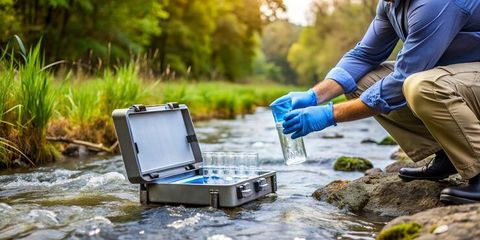
Portable meters are designed to provide measurements directly at the sampling location. Depending on the instrument, they can measure pH, electrical conductivity, total dissolved solids (TDS), dissolved oxygen, salinity, temperature, and other water quality parameters.
How Portable Water Quality Meters Work
Most portable water testing instruments use electronic sensors or probes that interact with a water sample. The sensor detects a particular physical or chemical characteristic and converts it into an electrical signal.
The instrument processes this signal and displays the measurement on a digital screen.
Common components include:
Digital display: Shows measurements and instrument settings.
Sensor probes: Detect specific water characteristics.
Calibration controls: Help maintain measurement accuracy.
Data storage: Records readings for later examination.
Temperature compensation: Adjusts certain measurements according to water temperature.
Protective casing: Helps protect electronic components during field use.
Different models have different capabilities. A basic meter may measure pH and conductivity, while advanced multiparameter instruments can monitor several characteristics using interchangeable probes.
Main Water Quality Parameters Measured
Different water testing parameters provide information about specific characteristics of a sample.
Parameter | What It Measures | Common Unit |
|---|---|---|
pH | Acidity or alkalinity | pH scale |
TDS | Dissolved substances | mg/L or ppm |
Conductivity | Ability to conduct electricity | µS/cm |
Dissolved oxygen | Oxygen present in water | mg/L |
Salinity | Concentration of dissolved salts | ppt or PSU |
Turbidity | Water cloudiness | NTU |
Temperature | Thermal condition | °C or °F |
These measurements help users understand water characteristics, but they do not identify every possible contaminant. For example, a standard TDS meter cannot determine whether dissolved substances include harmful metals, nitrates, or other chemicals.
Importance of Portable Water Quality Monitoring
Water quality monitoring has become increasingly important because water resources face pressure from population growth, urban development, agricultural activities, and industrial pollution.
Portable water testing instruments help users collect measurements at different locations and identify variations that may require additional investigation.
Who Uses Portable Water Quality Meters?
Several industries and professional groups depend on field-based water monitoring.
Environmental researchers: Examine rivers, lakes, groundwater, and other natural water resources.
Agricultural professionals: Monitor irrigation water and salinity conditions.
Industrial facilities: Observe water used in manufacturing, cooling systems, and production processes.
Water treatment plants: Monitor selected parameters during treatment operations.
Aquaculture operators: Check dissolved oxygen, temperature, pH, and salinity.
Government monitoring agencies: Conduct field assessments of public water resources.
Educational institutions: Demonstrate water chemistry and environmental science principles.
Problems Addressed by Portable Testing Technology
Traditional laboratory testing provides detailed analytical information, but transporting samples and waiting for laboratory results can delay initial assessments.
Portable instruments help address several practical challenges:
Identifying changes in water characteristics at the sampling location.
Monitoring multiple water sources during field investigations.
Supporting routine environmental observations.
Recording measurements across different locations.
Identifying samples that require advanced laboratory analysis.
Supporting emergency assessments following floods or pollution incidents.
Portable monitoring does not eliminate laboratory testing. Instead, it complements laboratory analysis by providing preliminary information and supporting more targeted investigations.
Recent Developments in Portable Water Testing Technology
Advances in Digital and Multiparameter Instruments
During 2025 and 2026, water monitoring technology continued moving towards compact instruments, digital data management, and faster field analysis.
Modern multiparameter meters increasingly combine several sensors in one instrument. This allows environmental professionals to examine multiple water characteristics without carrying separate devices for every measurement.
Bluetooth connectivity, GPS-enabled records, cloud-based reporting, and smartphone integration are also becoming important features in field monitoring systems.
Artificial Intelligence and Smart Sensor Integration
Artificial intelligence and connected sensor systems are creating new possibilities for water quality monitoring.
Emerging applications include:
Identifying unusual changes in historical water measurements.
Analysing patterns across multiple monitoring locations.
Supporting automated environmental alerts.
Combining sensor readings with geographical information.
Improving data interpretation through digital dashboards.
These technologies depend on reliable sensor readings and properly maintained measurement systems. Automated analysis should not replace validated testing procedures.
Important Developments During 2025–2026
Several developments demonstrate the direction of portable water testing technology.
July 31, 2025 – India's real-time water quality monitoring framework: The Indian government discussed water quality monitoring under urban water programmes. Information published by the Ministry of Housing and Urban Affairs highlighted the use of laboratory testing and field testing kits under existing monitoring arrangements.
November 21, 2025 – Mobile water analysis laboratories: A mobile water analysis laboratory called AquaRover was introduced in India. The initiative demonstrated how laboratory instruments and reporting systems can be brought directly to field locations.
March 16, 2026 – Community-based field testing: India's Ministry of Jal Shakti highlighted Field Testing Kits under the Jal Jeevan Mission. The programme encourages trained community members to conduct preliminary drinking water assessments at village, school, and Anganwadi locations.
April 1, 2026 – Multipollutant detection research: Research published in Talanta described a portable Multitracker device designed to detect arsenic, chromium, iron, and fluoride through optical sensing. The research demonstrated the potential of compact instruments for simultaneous contaminant analysis.
Technology Trends to Watch
Technology | Main Function | Potential Application |
|---|---|---|
IoT-enabled sensors | Connected measurement and reporting | Remote monitoring |
Multiparameter probes | Multiple water measurements | Environmental research |
Optical sensors | Detection of selected substances | Contamination assessment |
GPS integration | Location-based measurement records | Field surveys |
AI-based analysis | Identifying measurement patterns | Environmental data analysis |
Wireless connectivity | Transferring readings digitally | Industrial monitoring |
These developments indicate growing interest in faster, more connected, and location-independent water quality assessment.
Laws, Regulations, and Government Policies
Drinking Water Quality Standards in India
Water testing instruments are relevant to drinking water monitoring because public water supplies must be assessed against applicable quality standards.
In India, the Bureau of Indian Standards (BIS) publishes IS 10500:2012, the drinking water specification. The standard includes acceptable and permissible limits for different physical, chemical, and bacteriological parameters. BIS records show that the standard was reviewed in 2023 and includes four amendments.
Portable meters can help measure selected parameters, including pH, conductivity, and turbidity. However, they cannot independently establish compliance with every requirement of IS 10500.
Jal Jeevan Mission
The Jal Jeevan Mission is an Indian government programme focused on providing rural households with regular access to adequate quantities of prescribed-quality drinking water.
Water quality monitoring under the programme involves laboratory testing, field testing kits, community participation, and reporting through the Water Quality Management Information System (WQMIS).
The government has also encouraged periodic monitoring and remedial action when water quality concerns are identified.
International Regulatory Considerations
Water quality monitoring requirements differ between countries.
United States: The Environmental Protection Agency (EPA) establishes national drinking water standards under the Safe Drinking Water Act. Field measurements must follow appropriate monitoring procedures and approved analytical methods where required.
European Union: The Drinking Water Directive (EU) 2020/2184 establishes requirements for water intended for human consumption, including monitoring and risk-based management.
Global guidance: The World Health Organization publishes drinking water quality guidelines that countries can consider when developing national standards.
Portable meters should be selected and operated according to the relevant monitoring programme, analytical method, and regulatory requirements.
Why Regulatory Compliance Matters
A digital reading alone does not prove that drinking water is safe. Regulatory assessment may require accredited laboratory analysis, specific sampling procedures, documented calibration, and testing for microorganisms or chemical contaminants.
Organizations should therefore distinguish between preliminary field measurements and official compliance testing.
Tools and Resources for Water Quality Testing
Portable Testing Instruments and Accessories
Reliable field measurements depend on selecting appropriate instruments and maintaining their sensors.
Common equipment used in water quality monitoring includes:
Portable pH meters: Measure acidity and alkalinity in water samples.
TDS meters: Estimate the concentration of total dissolved substances.
Conductivity meters: Measure electrical conductivity for salinity and dissolved-ion assessments.
Dissolved oxygen meters: Monitor oxygen concentrations in aquatic environments.
Multiparameter water quality meters: Combine several measurement capabilities in one instrument.
Turbidity meters: Examine suspended particles that affect water clarity.
Calibration solutions: Provide reference values for checking sensor performance.
Helpful Digital Platforms and Resources
The following resources provide technical information, monitoring guidance, and regulatory references.
Resource | Main Purpose |
|---|---|
Bureau of Indian Standards | Indian drinking water specifications |
Jal Jeevan Mission | Drinking water monitoring information |
WQMIS | Water quality testing records and reporting |
US Environmental Protection Agency | Water testing methods and technical guidance |
World Health Organization | International drinking water guidelines |
European Environment Agency | Environmental water monitoring information |
National Accreditation Board for Testing and Calibration Laboratories (NABL) | Laboratory accreditation information |
Calibration and Measurement Best Practices
Proper instrument maintenance is important for obtaining dependable results.
Recommended practices include:
Calibrate pH sensors using appropriate standard buffer solutions.
Rinse probes according to manufacturer instructions between samples.
Store sensors under the recommended conditions.
Check battery levels before field investigations.
Record sampling locations, dates, temperatures, and measurement units.
Follow suitable sampling procedures to prevent contamination.
Compare unusual readings with laboratory results when necessary.
Regular calibration and documentation improve the consistency and traceability of water quality measurements.
Frequently Asked Questions
What Does a Portable Water Quality Meter Measure?
Depending on its design, a portable water quality meter can measure pH, electrical conductivity, total dissolved solids, dissolved oxygen, temperature, salinity, and turbidity. Advanced instruments may support additional measurements through specialized sensors.
Can a Portable Water Quality Meter Determine Whether Drinking Water Is Safe?
Not by itself. These instruments measure selected water characteristics but may not detect bacteria, viruses, pesticides, heavy metals, or other harmful contaminants. Comprehensive drinking water assessment requires appropriate laboratory testing.
What Is the Difference Between a TDS Meter and a Multiparameter Water Quality Meter?
A TDS meter estimates the concentration of dissolved substances, usually through an electrical conductivity measurement. A multiparameter meter can examine several characteristics, such as pH, dissolved oxygen, conductivity, and temperature, depending on its installed probes.
How Frequently Should a Portable Water Quality Meter Be Calibrated?
Calibration frequency depends on the instrument, sensor type, usage conditions, and manufacturer recommendations. Instruments used frequently in field environments may require more regular calibration checks than those used occasionally.
Which Industries Depend on Portable Water Quality Monitoring?
Environmental research, agriculture, aquaculture, manufacturing, wastewater treatment, drinking water management, and educational institutions commonly use portable water testing instruments.
Conclusion
Portable water quality meters play an important role in modern environmental monitoring and water management. Their compact design, digital measurement capabilities, and field-based operation help researchers, industrial professionals, agricultural users, and public monitoring organizations examine water characteristics in different environments.
Developments in multiparameter sensors, wireless connectivity, optical detection, and intelligent data analysis are expanding the possibilities of portable water testing technology.
However, accurate monitoring requires appropriate calibration, reliable sampling procedures, and an understanding of instrument limitations. Portable measurements should complement laboratory analysis, particularly when evaluating drinking water safety and regulatory compliance.
As water quality challenges continue to evolve, portable monitoring instruments are expected to remain an important part of environmental research, industrial water management, and public water quality assessment.

Related Post...
Tips for Choosing the Right Portable Welding Units for Different Projects
Updated: October 30, 2026
Read More
Seed Drills Guide: Understanding Features, Mechanisms, and Agricultural Uses
Updated: October 29, 2026
Read More
Textile Waste Recycling Machines: Insights Into Efficient Textile Recovery Solutions
Updated: October 28, 2026
Read More