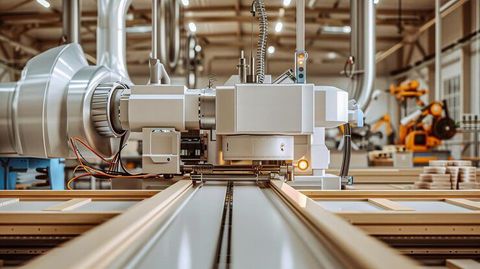
Seed Grading Machines: Tips for Understanding Modern Seed Sorting Technology
Seed grading machines are agricultural processing systems designed to separate seeds according to their size, shape, weight, density, and other physical characteristics. They play an important role in modern agriculture by helping farmers, seed processors, and agricultural businesses prepare seeds for storage, packaging, and planting. As farming practices become increasingly mechanised, seed grading machines are becoming an important part of seed processing operations. Understanding how these machines work, their different types, and the regulations surrounding seed quality helps explain their role in agricultural production.
What Are Seed Grading Machines?
Seed grading machines are mechanical systems used to sort seeds into different categories based on their physical properties. They separate mixed seed batches into groups with relatively similar characteristics, making subsequent processing and handling easier.
These machines are used for various agricultural seeds, including wheat, rice, maize, soybean, sunflower, pulses, vegetables, and oilseeds. Their design varies depending on the type of seed being processed and the characteristics that need to be evaluated.
Traditional seed sorting was often performed manually using sieves and simple separation methods. However, increasing agricultural production created a need for equipment that could handle larger quantities while maintaining consistent separation.
How Seed Grading Developed
The development of seed grading technology is closely connected to agricultural mechanisation. Early mechanical systems mainly relied on screens and gravity-based separation to distinguish seeds according to size and weight.
Over time, manufacturers introduced vibrating screens, air separation systems, and more specialised equipment. Modern systems may combine several separation techniques to identify differences that cannot be detected through size grading alone.
Today, seed grading machines are used in small agricultural processing facilities as well as large commercial seed processing plants.
Main Components of Seed Grading Machines
Although machine designs differ, many systems contain similar components:
Feeding hopper: Holds incoming seeds and controls their movement into the machine.
Vibrating screens: Separate seeds according to their dimensions through screens with different opening sizes.
Airflow system: Uses controlled air movement to separate lighter particles from heavier seeds.
Conveyor system: Moves seeds between different processing stages.
Collection outlets: Direct separated seed groups into individual containers.
Control panel: Allows operators to adjust operating settings such as vibration and airflow.
These components work together to create an organised separation process.
Importance
Why Seed Grading Matters in Agriculture
Seed quality influences several stages of agricultural production. Seeds that differ significantly in size, weight, or physical condition may behave differently during storage, mechanical planting, and handling.
Seed grading machines help create more uniform batches by separating seeds according to selected physical characteristics. This can improve consistency during later agricultural operations.
However, physical grading does not automatically establish seed viability, genetic purity, or germination performance. These characteristics require separate testing procedures.
Who Uses Seed Grading Machines?
Different groups involved in agricultural production depend on seed grading equipment.
Farmers: Use graded seeds to support more consistent planting and handling practices.
Seed processing companies: Separate large quantities of agricultural seeds into different grades.
Agricultural cooperatives: Process seeds collected from multiple farming operations.
Research institutions: Prepare seed samples for agricultural experiments and evaluation.
Vegetable seed producers: Separate small seeds according to physical characteristics.
Problems Addressed by Mechanical Seed Grading
Mixed seed batches can contain broken seeds, undersized particles, foreign materials, and seeds with different physical dimensions.
Mechanical grading helps address several common challenges:
Size variation: Separates seeds into groups with similar dimensions.
Foreign material: Helps remove certain unwanted particles through screening and airflow.
Planting consistency: Creates more uniform batches for mechanical seed distribution.
Processing efficiency: Reduces the amount of manual sorting required.
Storage preparation: Helps organise seed batches before further handling.
The actual results depend on seed characteristics, machine settings, equipment condition, and the separation method being used.
Common Applications Across Agricultural Crops
Seed grading technology is used across different agricultural sectors.
Crop category | Common grading requirement |
|---|---|
Wheat | Separation by size and physical condition |
Rice | Removal of smaller particles and broken grains |
Maize | Classification according to dimensions |
Soybean | Separation by size and weight |
Sunflower | Sorting according to seed dimensions |
Pulses | Separation of undersized and damaged seeds |
Vegetable seeds | Precise screening according to seed size |
Different crops require different screen dimensions and processing settings. Equipment designed for larger grains may not be suitable for smaller vegetable seeds without adjustments.
Recent Updates
Increasing Use of Automated Grading Systems
During 2024–2026, agricultural processing has continued moving towards greater automation and digital monitoring. Seed processing facilities increasingly use electronic controls to manage vibration, airflow, feeding rates, and other operating parameters.
Automated controls help operators maintain more consistent processing conditions. However, machine calibration and regular inspection remain important because seed characteristics can vary between batches.
Optical Sorting and Computer Vision
Optical sorting is an important development in modern seed processing. These systems use cameras, sensors, and image-processing technology to examine individual seeds and identify visible differences.
Some systems can detect characteristics such as:
Surface discoloration.
Visible cracks and damage.
Differences in seed shape.
Foreign particles.
Certain physical defects.
Computer vision technology can support more detailed inspection than conventional size-based screening. However, it cannot independently confirm every internal seed characteristic or determine all biological quality indicators.
Improvements in Energy and Resource Management
Another continuing development involves improving the energy use and operating efficiency of agricultural processing equipment.
Manufacturers are incorporating adjustable motors, improved airflow controls, and more efficient mechanical arrangements into certain equipment designs. These developments reflect broader agricultural efforts to reduce unnecessary energy consumption and material losses.
Integration with Complete Seed Processing Lines
Modern agricultural facilities increasingly combine multiple processing stages into connected systems.
A typical processing arrangement may include:
Pre-cleaning to remove larger unwanted materials.
Fine cleaning to separate smaller particles.
Size grading using mechanical screens.
Gravity separation according to density.
Optical sorting for visible defects.
Final inspection and packaging preparation.
Not every facility uses all these stages. The processing arrangement depends on the crop, seed characteristics, production volume, and required quality standards.
Laws or Policies
International Seed Quality Standards
Seed grading and processing are influenced by agricultural standards that address seed identity, purity, germination, and quality evaluation.
The International Seed Testing Association (ISTA) provides internationally recognised methods for seed sampling and testing. Its rules cover procedures used to evaluate characteristics such as physical purity, moisture content, and germination.
The Organisation for Economic Co-operation and Development (OECD) also operates seed schemes that support internationally recognised certification arrangements for participating countries.
These frameworks help establish consistent approaches to seed quality assessment and international trade.
Agricultural Seed Regulations in India
In India, seed production, distribution, and quality are governed by several regulatory frameworks.
The Seeds Act, 1966, establishes provisions relating to seed quality and regulation. The Seeds Rules, 1968, provide additional requirements concerning seed certification, labelling, and related procedures.
The Seeds (Control) Order, 1983, also addresses regulatory requirements concerning seed distribution and related activities.
The Indian seed regulatory framework includes provisions covering:
Minimum germination standards for notified seed varieties.
Physical purity requirements.
Seed labelling and identification.
Sampling and testing procedures.
Responsibilities of seed producers and distributors.
Quality monitoring by authorised authorities.
Seed grading machines support physical separation, but their operation does not replace legally required sampling, testing, certification, or labelling procedures.
Government Support for Agricultural Mechanisation
Agricultural mechanisation programmes in India encourage the adoption of suitable agricultural equipment through different government initiatives.
The Sub-Mission on Agricultural Mechanization (SMAM) is one such initiative. Its broader objectives include improving access to agricultural machinery, supporting mechanisation, and encouraging the use of appropriate equipment.
Eligibility, equipment coverage, financial assistance, and implementation arrangements depend on the applicable government guidelines and state-level provisions.
Tools and Resources
Types of Seed Grading Equipment
Different machines perform different separation functions. Understanding their characteristics helps explain how a complete seed processing operation is organised.
1. Vibratory Seed Graders: These machines use vibrating screens to separate seeds according to their dimensions. Different screen openings allow seeds of different sizes to move into separate collection areas.
2. Air Screen Cleaners: These systems combine airflow and screening. Air removes lighter materials, while screens separate seeds according to size.
3. Gravity Separators: These machines use differences in seed density and weight. They are commonly used when seeds have similar dimensions but different physical densities.
4. Rotary Screen Graders: These systems use rotating cylindrical screens to classify seeds according to their size. They are used in certain grain and seed processing operations.
5. Optical Seed Sorters: These machines use cameras and sensors to identify visible differences in seeds. Selected separation mechanisms remove materials that do not match the programmed criteria.
Important Technical Factors
Several operating parameters influence seed grading performance.
Technical factor | Purpose |
|---|---|
Screen opening | Determines the size of particles passing through |
Vibration frequency | Influences seed movement across screens |
Airflow intensity | Separates materials according to aerodynamic properties |
Feeding rate | Controls the quantity entering the machine |
Seed moisture | Influences handling and separation behaviour |
Machine capacity | Indicates the amount of material processed over time |
Operators need to consider these factors when handling different seed varieties. Incorrect settings may increase seed damage or reduce separation accuracy.
Useful Agricultural Resources
Several organisations and digital resources provide information about seed processing, quality standards, and agricultural machinery.
International Seed Testing Association (ISTA): Provides technical information about seed testing methods and international testing rules.
Food and Agriculture Organization (FAO): Publishes agricultural information covering seed systems, crop production, and post-harvest management.
Indian Council of Agricultural Research (ICAR): Provides agricultural research and technical publications relating to seed production and crop management.
Ministry of Agriculture and Farmers Welfare, India: Publishes information about agricultural policies, mechanisation programmes, and farming initiatives.
Agricultural universities: Provide educational material about seed technology, processing methods, and agricultural engineering.
These resources help readers understand the relationship between mechanical grading, seed testing, and agricultural quality management.
FAQs
What Are Seed Grading Machines Used For?
Seed grading machines are used to separate seeds according to physical characteristics such as size, shape, weight, and density. They help prepare more uniform batches for storage, further processing, and agricultural planting.
How Do Seed Grading Machines Work?
Most seed grading machines use vibrating screens, airflow, gravity, or optical sensors to separate different materials. Some systems combine multiple techniques to achieve several stages of separation within one processing arrangement.
What Are the Different Types of Seed Grading Machines?
Common types include vibratory graders, air screen cleaners, gravity separators, rotary screen graders, and optical seed sorters. Each type uses a different separation principle and is suitable for particular processing requirements.
Can Seed Grading Machines Improve Seed Quality?
These machines can improve physical uniformity by separating seeds according to selected characteristics. However, grading alone cannot confirm germination ability, genetic purity, or freedom from internal defects. Separate laboratory testing may be necessary.
Which Factors Affect Seed Grading Accuracy?
Important factors include seed size variation, moisture content, feeding rate, screen dimensions, airflow, vibration settings, and machine condition. Incorrect operating settings can affect separation results and increase physical seed damage.
Conclusion
Seed grading machines play an important role in agricultural processing by separating seeds according to their physical characteristics. Different technologies, including vibrating screens, airflow systems, gravity separation, and optical sorting, address different processing requirements. Recent developments in automation and computer vision are expanding the capabilities of modern seed processing systems. Agricultural regulations and seed testing standards also remain important for maintaining consistency and quality throughout the seed production process.

Related Post...
Explore Label Printing Machines: Types, Features, and Industrial Applications
Updated: November 25, 2026
Read More
Explore Modern Paper Recycling Plants and Their Role in Sustainable Manufacturing
Updated: November 25, 2026
Read More
How Carton Lamination Lines Work: An Introduction to Industrial Applications
Updated: November 28, 2026
Read More