How Carton Lamination Lines Work: An Introduction to Industrial Applications
Carton Lamination Lines are industrial systems used to apply protective or functional layers to paperboard and carton materials. They help improve surface appearance, moisture resistance, print protection, and packaging performance. Understanding how these production lines work helps readers learn about packaging materials, manufacturing processes, and modern industrial requirements.
Lamination has become an important part of modern packaging because ordinary paperboard can be affected by moisture, friction, dust, and handling. Adding a suitable layer helps protect the underlying material while creating a smoother surface for printing, finishing, and further manufacturing processes.
What Are Carton Lamination Lines?
A carton lamination line is a connected arrangement of machines that joins a printed or unprinted paperboard sheet with another material. Depending on the production method, the additional layer may consist of plastic film, paper, foil, or a specialized coating material.
The finished laminated sheet can be used to manufacture folding cartons, product boxes, display packaging, and other paper-based containers. Different production systems are designed for different sheet sizes, material thicknesses, adhesives, and output requirements.
How the Lamination Process Developed
Traditional paper packaging was mainly produced using printing, cutting, folding, and gluing processes. As packaging requirements changed, manufacturers began introducing additional protective layers to improve the performance and appearance of paperboard products.
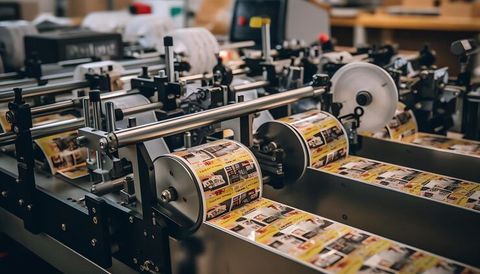
Mechanical developments made it possible to combine printing and lamination operations more efficiently. Modern equipment can incorporate automatic sheet feeding, adhesive application, film positioning, pressure rollers, drying systems, and sheet delivery.
Today, Carton Lamination Lines are available in different configurations, ranging from relatively simple systems to automated production arrangements with digital monitoring and quality inspection features.
Main Materials Used in Carton Lamination
The materials used depend on the intended packaging application.
Paperboard: Provides the main structural foundation of the carton.
Plastic film: Adds surface protection and may improve resistance to moisture and abrasion.
Aluminium foil: Provides a barrier against light, moisture, and certain gases in suitable packaging structures.
Adhesives: Connect separate layers and maintain bonding strength.
Specialty paper: Provides a particular surface texture or appearance.
Water-based coatings: Create protective surface layers for selected packaging applications.
Not every material is suitable for every carton. Compatibility depends on the packaging purpose, printing method, recycling requirements, and conditions in which the finished product will be stored or transported.
Importance
Carton Lamination Lines play an important role in modern packaging because products often require packaging that can withstand storage, transportation, stacking, and repeated handling. Laminated paperboard can provide additional surface protection while supporting the visual presentation of packaged products.
The technology affects packaging manufacturers, printing companies, paperboard producers, retailers, and industries that depend on carton-based packaging. Its importance is also connected to changing consumer expectations and the growing use of printed packaging across international markets.
Why Carton Lamination Matters
Lamination addresses several practical challenges associated with ordinary paperboard. Depending on the materials and production method, it can provide the following benefits:
Moisture resistance: Certain laminated surfaces reduce the absorption of moisture and help protect packaging during storage and transportation.
Surface durability: Protective films can reduce scratches, scuff marks, and damage caused by routine handling.
Printing appearance: Lamination can create a smooth surface that supports the appearance of printed colours, graphics, and text.
Structural protection: Combining suitable layers can improve resistance to certain forms of surface damage.
Packaging presentation: Glossy, matte, and textured finishes allow manufacturers to produce different visual effects.
Product identification: A suitable laminated surface can help preserve printed information, branding elements, and packaging instructions.
However, lamination does not automatically make every carton waterproof or suitable for direct food contact. The actual performance depends on the selected materials, bonding method, thickness, and packaging design.
Industries That Use Laminated Cartons
Several industries use laminated paperboard packaging for different purposes.
Food and beverage: Cartons for dry foods, confectionery, bakery products, and selected beverage applications may use laminated structures to provide particular barrier properties.
Cosmetics and personal care: Packaging for skincare products, fragrances, and personal care items often uses decorative finishes to create a distinctive appearance.
Electronics: Laminated cartons can provide a smooth printed exterior and additional surface protection for packaging containing electronic accessories.
Pharmaceutical packaging: Certain medicine cartons use protective finishes to preserve printed information and improve resistance to handling. Specific packaging requirements depend on the product and applicable regulations.
Household products: Cleaning products, small household accessories, and consumer goods may use laminated paperboard cartons for identification and presentation.
Common Challenges in the Lamination Process
Although lamination provides several useful properties, production can involve technical challenges.
Uneven adhesive application can create weak bonding or visible surface defects.
Incorrect roller pressure can cause wrinkles, bubbles, or material distortion.
Inconsistent film tension can affect sheet alignment.
Excessive moisture or unsuitable operating conditions can influence bonding performance.
Incompatible materials can create difficulties during recycling.
Poor machine calibration can result in inconsistent finished sheets.
These challenges make process monitoring and material selection important parts of carton manufacturing.
Recent Updates
The packaging industry has been experiencing changes in material selection, automation, production monitoring, and environmental considerations. Between 2024 and 2026, these developments have influenced how manufacturers evaluate Carton Lamination Lines and their role in packaging production.
Growing Interest in Sustainable Packaging
One noticeable trend is the increased attention given to recyclable paper-based packaging. Manufacturers are examining alternatives to conventional multi-material structures because certain combinations of paperboard, plastic films, and adhesives can complicate recycling.
Developments include:
Paper-based barrier materials designed for selected packaging applications.
Water-based adhesive systems for particular lamination processes.
Reduced material thickness where packaging performance allows.
Improved separation and recovery of packaging components.
Greater consideration of recycled paperboard in suitable applications.
These approaches are not universally interchangeable. Packaging performance, food-contact requirements, and recycling infrastructure influence which materials can be used.
Increasing Automation
Modern Carton Lamination Lines increasingly incorporate automated feeding, alignment, adhesive control, and sheet collection systems. Automation can help maintain consistent production conditions and reduce the need for repeated manual adjustments.
Some equipment configurations also include sensors that monitor sheet movement, film tension, temperature, and production speed. These features help operators identify irregularities during production.
Digital Monitoring and Quality Control
Digital monitoring is becoming more relevant in industrial packaging operations. Machine interfaces can display operating conditions, production counts, temperature readings, and maintenance information.
Some production environments also use inspection cameras and automated detection systems to identify visible defects. These technologies can help identify wrinkles, incorrect alignment, surface contamination, and other quality problems.
Comparison of Recent Industry Developments
Development | Main purpose | Potential application |
|---|---|---|
Automated sheet feeding | Maintain consistent material movement | High-volume carton production |
Water-based adhesives | Support selected material combinations | Paperboard lamination |
Digital monitoring | Track operating conditions | Production management |
Optical inspection | Identify visible defects | Quality control |
Paper-based barriers | Explore alternative packaging structures | Selected consumer packaging |
Energy monitoring | Understand electricity consumption | Industrial production facilities |
The overall direction is toward more controlled production, improved material efficiency, and packaging structures that consider their environmental impact throughout their life cycle.
Laws or Policies
Carton Lamination Lines are influenced by packaging regulations, environmental policies, chemical safety requirements, machinery standards, and waste-management rules. These requirements vary between countries and depend on the materials being processed and the products being packaged.
There is no single international regulation covering every aspect of carton lamination. Manufacturers generally need to consider both production equipment requirements and regulations governing the finished packaging.
Packaging and Environmental Regulations
Environmental regulations increasingly address packaging waste, recyclability, material recovery, and the use of certain substances.
Important regulatory areas include:
European Union: The Packaging and Packaging Waste Regulation introduces requirements concerning packaging design, waste prevention, recyclability, and packaging materials. Its implementation is relevant to manufacturers supplying packaging within the European market. The framework encourages consideration of packaging throughout its life cycle.
United States: Federal and state-level environmental requirements influence packaging waste management, material use, and recycling practices. The Food and Drug Administration also regulates materials used in food-contact applications. Packaging manufacturers must consider applicable requirements when producing cartons intended for food products.
International markets: Countries have different rules covering packaging waste, extended producer responsibility, chemical restrictions, and product labelling. Businesses operating across borders may need to meet several regulatory frameworks.
Food-Contact Packaging Requirements
Cartons intended for food packaging require particular attention because materials can potentially transfer substances into food.
Relevant considerations include:
Suitability of adhesives and laminating films.
Chemical migration from packaging materials.
Hygiene during production and storage.
Compatibility with the packaged food.
Temperature and moisture conditions.
Documentation of material composition and testing.
For example, European food-contact framework regulations and applicable national requirements establish conditions for materials intended to come into contact with food. In the United States, relevant FDA regulations cover certain food-contact substances.
Machinery Safety and Workplace Requirements
The operation of Carton Lamination Lines also involves machinery safety and workplace protection. Industrial equipment may contain heated rollers, moving components, electrical systems, and pressure mechanisms.
Common safety considerations include:
Emergency stop mechanisms.
Machine guards around moving components.
Electrical safety and equipment grounding.
Proper ventilation where adhesive processes require it.
Operator training and documented procedures.
Safe handling and storage of production chemicals.
The applicable machinery and workplace requirements depend on the country where the equipment operates.
Tools and Resources
Several technical tools and information resources help manufacturers understand lamination processes, evaluate materials, monitor production, and maintain equipment. Their usefulness depends on the machine configuration and the type of packaging being produced.
Production Planning Tools
Production planning software helps coordinate sheet quantities, machine operating schedules, material requirements, and production records.
Common functions include:
Production scheduling and workflow management.
Material inventory tracking.
Machine operating records.
Production quantity calculations.
Maintenance planning.
Quality inspection documentation.
Manufacturing execution systems (MES) can also connect production equipment with wider manufacturing operations.
Lamination Process Calculators
Calculators and measurement tools help operators estimate production requirements and understand machine performance.
Some commonly used calculations include:
Production output: Estimates the number of sheets processed during a particular operating period.
Material consumption: Estimates the quantity of film required for a particular production batch.
Production efficiency: Compares actual output with the planned production quantity.
These calculations provide general estimates. Actual results depend on machine interruptions, material dimensions, rejected sheets, and production settings.
Material Testing and Quality Control Tools
Quality control equipment helps evaluate whether laminated sheets meet the required production specifications.
Common tools include:
Peel strength testers: Measure the force required to separate bonded materials.
Thickness gauges: Measure the combined thickness of laminated sheets.
Moisture meters: Help assess moisture conditions in paperboard.
Gloss meters: Measure the gloss level of a finished surface.
Tensile testing equipment: Evaluates the mechanical strength of selected materials.
Optical inspection systems: Identify visible defects and surface irregularities.
Industry Information Resources
Manufacturers and packaging professionals can refer to established technical organisations and regulatory platforms for general information.
International Organization for Standardization (ISO): Provides information about international standards for quality management, environmental management, and testing.
European Commission: Publishes information about European packaging, waste-management, and food-contact regulations.
United States Food and Drug Administration (FDA): Provides regulatory information about food-contact materials.
Occupational Safety and Health Administration (OSHA): Provides workplace safety information relevant to industrial machinery operations.
Flexible Packaging Association: Provides industry information about flexible packaging materials and manufacturing developments.
These resources help explain general requirements, although individual production operations may require additional technical assessment.
FAQs
What are Carton Lamination Lines used for?
Carton Lamination Lines are used to combine paperboard with protective or decorative materials. The finished sheets are commonly used to manufacture packaging for food products, cosmetics, electronics, household goods, and other consumer items.
How does a carton lamination machine work?
A carton lamination machine feeds paperboard and a selected laminating material through a series of rollers. Adhesive may be applied before the materials are combined under controlled pressure. Depending on the equipment, drying, cooling, and sheet delivery operations follow.
Which materials are used in Carton Lamination Lines?
Common materials include paperboard, plastic films, aluminium foil, specialty paper, and different adhesive formulations. Material selection depends on the packaging application, required surface properties, and environmental considerations.
What are the different types of carton lamination processes?
Common processes include thermal lamination, adhesive lamination, and extrusion lamination. Thermal lamination uses heat-activated film, adhesive lamination joins materials using a bonding substance, and extrusion lamination uses molten polymer to connect layers.
How can lamination quality be maintained?
Lamination quality depends on consistent adhesive application, suitable temperature and pressure settings, correct film alignment, and appropriate material selection. Regular equipment inspection and quality testing also help identify production irregularities.
Conclusion
Carton Lamination Lines are an important part of modern paperboard packaging production. They combine different materials to improve surface protection, printing appearance, and packaging performance. Recent industry developments are increasingly focused on automation, digital monitoring, and recyclable packaging structures. Material compatibility, machinery safety, and environmental regulations remain important considerations throughout the lamination process.

Related Post...
Explore Modern Paper Recycling Plants and Their Role in Sustainable Manufacturing
Updated: November 25, 2026
Read More
Metal Polishing Machines: Essential Tips for Understanding Performance and Uses
Updated: November 28, 2026
Read More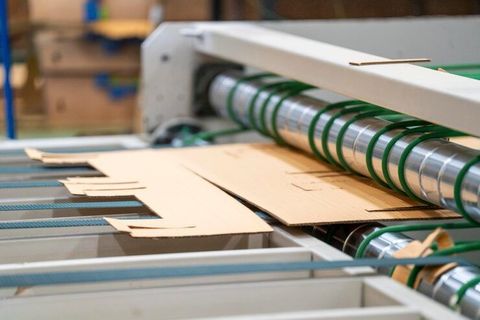
How Carton Lamination Lines Work: An Introduction to Industrial Applications
Updated: November 28, 2026
Read More