Explore Modern Organic-Shaped Sofas: Designs, Materials, and Interior Trends
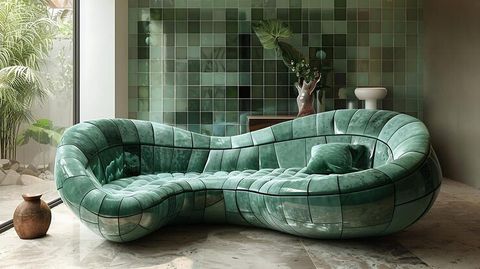
Modern organic-shaped sofas are contemporary seating designs inspired by natural forms, flowing lines, and irregular geometric shapes. Unlike conventional sofas that usually feature straight backs, sharp corners, and rectangular structures, these designs incorporate rounded edges, curved profiles, asymmetrical outlines, and sculptural proportions.
The concept comes from organic modernism, an interior design approach that combines natural influences with contemporary materials and construction techniques. It draws inspiration from shapes found in nature, including stones, waves, clouds, leaves, and flowing landscapes.
These sofas are becoming an important element in modern interior architecture because they combine functional seating with artistic expression. Their appearance can soften rooms dominated by straight architectural lines and create a more visually balanced environment.
Common characteristics include:
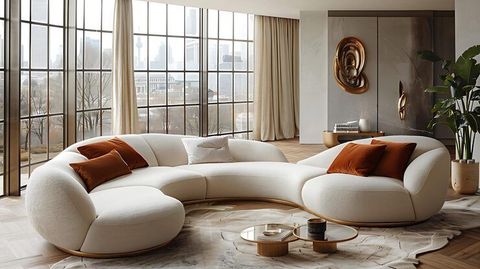
Curved silhouettes: Rounded backs, crescent-shaped seating, and continuous contours.
Asymmetrical structures: Designs that use irregular proportions rather than conventional symmetry.
Soft upholstery: Textured fabrics, bouclé, velvet, linen blends, and chenille.
Sculptural bases: Rounded wooden platforms, concealed supports, or low-profile structures.
Natural colour palettes: Cream, beige, olive, terracotta, brown, and muted grey.
Modern organic-shaped sofas are available in different configurations, including two-seater couches, three-seater designs, curved sectionals, modular seating systems, and compact lounge sofas.
Why Organic-Shaped Sofa Designs Matter Today
Contemporary residential architecture increasingly focuses on creating comfortable, adaptable, and visually connected living environments. Organic-shaped sofas contribute to this approach by introducing softer forms into spaces that often contain rectangular windows, straight walls, and angular furniture.
They are relevant to homeowners, interior designers, architects, hospitality planners, and furniture manufacturers working with contemporary living spaces.
Improving Interior Visual Balance
A curved sofa can reduce the visual dominance of sharp architectural lines. In minimalist living rooms, a rounded seating arrangement creates contrast without requiring numerous decorative elements.
For example, a crescent-shaped sofa positioned around an oval coffee table can establish a natural focal point. This arrangement can also make conversation areas feel more connected.
Supporting Social Interaction
Traditional straight sofas generally position people side by side. Curved seating arrangements can create more direct face-to-face interaction, particularly in larger living rooms and hospitality environments.
Potential applications include:
Residential family rooms and open-plan apartments.
Hotel reception areas and hospitality lounges.
Contemporary office relaxation spaces.
Residential clubhouses and shared indoor environments.
Interior architecture projects requiring distinctive seating arrangements.
Making Better Use of Interior Space
Different organic sofa configurations can help define areas within open-plan interiors. A curved sectional, for example, can separate a lounge area from a dining space without introducing a physical partition.
However, curved sofas do not automatically save space. Their rounded backs and extended dimensions can require more floor area than conventional furniture.
Connecting Furniture with Natural Materials
Organic modern furniture frequently incorporates natural textures and earthy colours. Combining curved upholstery with timber flooring, stone surfaces, natural lighting, and textured wall finishes can create a consistent interior appearance.
Recent Developments and Design Trends in 2025–2026
During 2025 and 2026, curved furniture, sculptural seating, tactile upholstery, and nature-inspired interiors continued to receive attention from interior designers.
A 2025 interior design trend report highlighted biomorphic furniture, describing the growing interest in flowing silhouettes and nature-inspired forms. In November 2025, interior design coverage also identified curved furniture and layered textures as important directions for 2026.
A 2026 designer survey published by 1stDibs reported that 43% of participating designers identified curvy and irregular-shaped furniture as a notable trend. This indicates continued professional interest in sculptural furniture rather than establishing that every consumer prefers these designs.
Several developments are particularly relevant.
1. Sculptural and Biomorphic Sofa Designs
Manufacturers are exploring sofas with rounded backs, irregular seating profiles, curved armrests, and continuous upholstery surfaces.
Kidney-shaped sofas, crescent sofas, and cloud-inspired seating are examples of this approach. These designs are frequently used as statement furniture in contemporary residential interiors.
2. Textured Upholstery Materials
Bouclé, chenille, velvet, and textured woven fabrics remain important in contemporary sofa design.
Their different surface characteristics influence the visual appearance of curved structures. Bouclé creates a textured appearance, while velvet provides a smoother finish with visible light reflection.
3. Modular Organic Seating Systems
Modular organic sofas combine curved sections, individual seating units, corner elements, and movable components.
This approach allows interior planners to create different seating arrangements depending on room dimensions and household requirements.
4. Earthy Colours and Natural Finishes
Warm neutral colours continue to complement organic furniture.
Common combinations include:
Cream upholstery with natural oak.
Olive green fabric with walnut finishes.
Sand-coloured seating with limestone surfaces.
Terracotta upholstery with warm neutral walls.
Chocolate brown fabrics with brushed metal details.
5. A Combination of Comfort and Artistic Form
Current contemporary furniture design increasingly combines sculptural appearance with practical considerations such as seating depth, back support, cushion construction, and durable upholstery.
The emphasis is not only on creating unusual silhouettes but also on ensuring that furniture remains suitable for everyday use.
Furniture Safety Laws, Regulations, and Material Standards
Modern organic-shaped sofas are influenced by product safety requirements, upholstery standards, chemical regulations, and fire-resistance guidelines. The applicable requirements depend on the manufacturing location and the country where the furniture is used.
There is no single international regulation governing every aspect of organic-shaped sofa design.
India: Bureau of Indian Standards (BIS)
India has established standards concerning the fire resistance of upholstery materials used in non-domestic furniture.
The Protective Textiles Quality Control Order, 2024, introduced mandatory requirements relating to IS 15768:2008 for upholstered composites used in non-domestic furniture.
The requirements cover upholstery materials intended for public environments, including offices, hospitals, airports, educational institutions, and other public spaces.
The domestic and non-domestic furniture distinction is important. The requirements should not automatically be interpreted as applying identically to every household sofa.
The Bureau of Indian Standards also maintains technical standards concerning upholstery ignition testing and textile characteristics.
United States: Upholstered Furniture Fire Safety
In the United States, upholstered furniture is subject to federal flammability requirements under 16 CFR Part 1640.
The regulation incorporates California Technical Bulletin 117-2013, which establishes testing requirements for the smolder resistance of upholstered furniture materials.
Manufacturers and importers must consider the applicable testing, labeling, and certification requirements.
European Union: General Product Safety and Chemical Regulations
The European Union's General Product Safety Regulation (EU) 2023/988 has applied since 13 December 2024.
It establishes general consumer product safety responsibilities for manufacturers, importers, distributors, and other economic operators.
REACH regulations also affect furniture materials by restricting certain hazardous chemical substances. These requirements can be relevant to upholstery fabrics, coatings, adhesives, and other components.
Important considerations for furniture manufacturers and interior planners:
Verify upholstery fire-resistance requirements for the intended environment.
Review chemical safety information for fabrics, adhesives, and finishes.
Check applicable product labeling and traceability requirements.
Confirm the suitability of structural materials and supporting components.
Consider accessibility and fire safety requirements in commercial interiors.
Regulatory requirements can change, so manufacturers should consult the relevant national authorities and current technical standards before production or installation.
Tools and Resources for Sofa Design and Interior Planning
Several digital tools and technical resources help architects, interior designers, furniture manufacturers, and homeowners understand organic-shaped furniture.
1. Interior Design and Space Planning Software
SketchUp: Useful for creating three-dimensional sofa models and testing furniture arrangements.
Autodesk AutoCAD: Helps prepare accurate furniture layouts, room dimensions, and technical drawings.
Autodesk Revit: Supports architectural modelling and coordination of interior furniture elements.
Homestyler: Helps visualize different sofa configurations within residential interiors.
2. Furniture Design and 3D Modelling Tools
Blender: Supports detailed 3D modelling of curved sofa structures and sculptural furniture.
Rhinoceros 3D: Useful for developing complex organic surfaces and curved furniture geometry.
Autodesk Fusion: Supports product development and technical modelling of furniture components.
3. Upholstery and Material Selection Resources
Material selection is an important part of contemporary sofa design. Designers can examine:
Fabric composition and abrasion resistance.
Cushion density and resilience.
Upholstery cleaning requirements.
Colourfastness and light exposure.
Frame construction and structural durability.
4. Helpful Furniture Planning Measurements
The following table provides illustrative planning ranges rather than universal furniture specifications.
| Furniture measurement | Typical planning range |
|---|---|
| Sofa seat height | 40–48 cm |
| Seat depth | 50–65 cm |
| Backrest height from floor | 75–95 cm |
| Coffee table clearance | 35–45 cm |
| Main walking passage | 75–90 cm |
Actual dimensions depend on the sofa configuration, user requirements, room layout, and applicable accessibility guidelines.
5. Useful Research Resources
Interior design publications, furniture material databases, national standards organisations, and manufacturer technical documentation can help users evaluate modern organic sofa designs.
These resources are particularly useful when comparing upholstery materials, understanding construction methods, and planning furniture dimensions.
Frequently Asked Questions
1. What makes a sofa organic-shaped?
An organic-shaped sofa uses natural-looking contours, curved profiles, asymmetrical structures, and rounded edges. Its design differs from conventional rectangular sofas by prioritising flowing shapes and softer visual proportions.
2. Are modern organic-shaped sofas suitable for small apartments?
Yes, selected compact designs can work in smaller apartments. However, their curved structures may occupy more floor area than expected. Measuring the room, checking passageways, and reviewing the complete sofa dimensions are important before choosing a configuration.
3. Which upholstery materials are commonly used for organic-shaped sofas?
Popular materials include bouclé, chenille, velvet, linen blends, and textured synthetic fabrics. Each material has different characteristics relating to durability, maintenance, appearance, and comfort.
4. Do curved sofas provide the same seating comfort as traditional sofas?
Comfort depends on seat depth, cushion density, back support, upholstery construction, and individual preferences. A curved silhouette alone does not guarantee better ergonomic support. Furniture should be evaluated using its actual seating dimensions and construction details.
5. How can organic-shaped sofas complement modern interior design?
They can be combined with rounded coffee tables, natural timber finishes, textured rugs, soft lighting, and neutral wall colours. Mixing curved furniture with selected straight-lined elements also helps maintain visual balance.
Conclusion
Modern organic-shaped sofas represent an important direction in contemporary furniture design. Their flowing silhouettes, rounded profiles, nature-inspired forms, and textured upholstery provide alternatives to conventional rectangular seating.
Developments during 2025 and 2026 indicate continued interest in sculptural furniture, modular seating systems, earthy colours, and tactile materials. However, selecting an appropriate design requires more than considering appearance alone.
Room dimensions, seating comfort, upholstery durability, structural construction, maintenance requirements, and applicable safety regulations should all influence furniture planning.
As contemporary interior architecture continues to explore the relationship between functionality and natural aesthetics, organic-shaped sofas remain a relevant subject for homeowners, interior designers, architects, and furniture manufacturers.

Related Post...
Guide to Choosing Bold Color Dining Sets for Stylish Home Interiors
Updated: October 26, 2026
Read More
Guide to Choosing Standing Desks for Home Offices With Better Stability and Height Range
Updated: October 28, 2026
Read More
Round Dining Table Designs: Explore Elegant Styles for Modern Living Spaces
Updated: October 29, 2026
Read More