Discover Bar Stud Earrings: A Guide to Minimalist Jewelry and Timeless Style
Bar stud earrings are a type of jewelry featuring a straight, curved, or slightly angled bar-shaped design that sits close to the earlobe. Unlike traditional round studs, which often feature a single gemstone or decorative shape, bar studs emphasize clean lines and geometric forms. Their appearance can range from simple metal bars to detailed designs featuring diamonds, colored gemstones, or textured surfaces.
These earrings are part of a broader movement toward geometric jewelry, minimalist accessories, and contemporary fine jewelry. Their compact structure makes them suitable for different personal styles, including formal clothing, everyday outfits, and coordinated jewelry arrangements.
Common Types of Bar Stud Earrings
Bar stud earrings are available in several designs, each offering a different visual effect.
Horizontal bar studs: Feature a straight bar positioned across the earlobe, creating a balanced and understated appearance.
Vertical bar studs: Follow an upright direction and can create a longer visual line.
Diamond bar studs: Incorporate small diamonds arranged along a metal bar.
Gold bar studs: Use yellow, white, or rose gold to create a simple metallic design.
Gemstone bar studs: Feature colored stones such as sapphires, emeralds, or rubies.
Curved bar studs: Use a gentle arc rather than a completely straight structure.
Textured bar studs: Include brushed, hammered, polished, or patterned surfaces.
Some designs feature a single bar, while others use two parallel bars or small decorative elements. The choice depends on personal preference, ear anatomy, and the intended appearance.
Materials and Construction
The material influences the appearance, durability, maintenance requirements, and suitability of bar stud earrings for different wearers.
Common materials include:
Gold: Available in different purity levels and colors. Higher-purity gold is generally softer than many lower-karat gold alloys.
Sterling silver: Typically contains 92.5% silver and 7.5% other metals, often copper.
Platinum: A dense precious metal valued for its durability and naturally white appearance.
Titanium: Used in some lightweight jewelry designs and certain implant-grade jewelry applications.
Stainless steel: Used in various jewelry styles, although composition and nickel release can vary.
Diamonds and colored gemstones: Add decorative detail and influence the overall appearance of the design.
The post, backing, and contact surfaces deserve particular attention because they remain in direct contact with the ear. Smooth finishing, secure closures, and appropriate materials contribute to comfort during wear.
Why Bar Stud Earrings Matter in Modern Jewelry
Bar stud earrings have become a recognizable part of contemporary jewelry design because they combine geometric shapes with relatively compact proportions. They appeal to people who prefer understated accessories as well as those who want to coordinate several earrings in multiple piercings.
Their straight lines can complement other geometric jewelry, including chain necklaces, rectangular pendants, and slim bracelets. At the same time, gemstone versions provide a more decorative appearance without changing the basic bar-shaped structure.
Everyday Styling and Personal Expression
Bar studs can be incorporated into different clothing styles because their designs range from subtle metallic shapes to elaborate gemstone arrangements.
Examples include:
Pairing small gold bars with neutral clothing for a simple appearance.
Coordinating diamond bar studs with other diamond jewelry for formal occasions.
Combining different bar lengths across multiple ear piercings.
Using colored gemstone bars to introduce contrast into an outfit.
Matching metal tones across earrings, necklaces, and bracelets for a coordinated look.
These are styling preferences rather than fixed rules. Personal taste, cultural practices, and individual comfort determine how jewelry is worn.
Comfort, Fit and Skin Sensitivity
The dimensions and construction of an earring influence how it feels during extended wear. A long or heavy bar can create pressure on the earlobe, particularly when its weight is concentrated away from the piercing.
Before choosing a design, consider:
The overall length, thickness, and weight of the bar.
Whether the post is smooth and appropriately sized.
The type of backing and how securely it fits.
The presence of nickel or other metals that may cause skin reactions.
Whether the earring catches on clothing, hair, or headphones.
People with known metal sensitivities should review material information carefully. Terms such as hypoallergenic do not guarantee that a product will be suitable for every individual.
Recent Trends in Bar Stud Earrings
During 2025 and 2026, contemporary jewelry design continued to reflect interest in geometric shapes, personalized combinations, mixed metals, and versatile fine jewelry. Bar stud earrings fit these broader trends because their simple structure can be adapted to many materials and decorative styles.
These observations describe general design directions rather than a quantified ranking of global jewelry sales.
Minimalist and Geometric Designs
Straight lines, small rectangular shapes, and architectural details remain recognizable features of contemporary jewelry. Bar studs offer a way to incorporate these forms without relying on large or elaborate ornaments.
Popular design directions include narrow gold bars, polished white-metal finishes, asymmetrical pairs, and small diamonds arranged in linear patterns.
Mixed Metals and Personalization
Some jewelry arrangements combine yellow gold, white gold, rose gold, and silver-colored metals. This approach allows different pieces to be coordinated without requiring identical finishes.
Personalized arrangements may also involve different bar lengths, gemstone colors, or combinations of horizontal and vertical studs. In multiple-piercing arrangements, spacing and earring dimensions are important for visual balance and comfort.
Laboratory-Grown Diamonds and Material Transparency
Laboratory-grown diamonds continued to receive attention in the fine jewelry market during 2025 and 2026. These diamonds have essentially the same chemical composition and crystal structure as natural diamonds, but they are created through technological processes rather than geological formation.
They should be distinguished from diamond simulants, such as cubic zirconia, which have different physical and optical properties.
Clear material descriptions, gemstone identification, and accurate disclosure of origin are important when comparing jewelry. Consumers should not assume that laboratory-grown and natural diamonds have identical market values or origins.
Design Considerations at a Glance
| Design feature | Common characteristic | Practical consideration |
|---|---|---|
| Minimalist metal bar | Clean, simple lines | Check edges and finishing |
| Diamond bar | Linear gemstone arrangement | Review setting security |
| Gold bar | Warm or white metallic appearance | Consider gold purity and alloy |
| Curved bar | Gentle arc | Check fit against the earlobe |
| Mixed-metal design | Combines different metal tones | Consider overall coordination |
| Gemstone bar | Colored decorative stones | Check stone durability and setting |
Laws, Standards and Jewelry Regulations
Jewelry regulations vary by country and may cover precious-metal purity, product descriptions, gemstone disclosure, nickel release, consumer protection, and hallmarking. The rules applicable to a particular pair of earrings depend on the material, the country in which the item is marketed, and the relevant legal framework.
Precious-Metal Standards in India
In India, the Bureau of Indian Standards (BIS) administers hallmarking arrangements for covered gold and silver articles. Hallmarking helps communicate the declared purity of precious metal through prescribed marks and identification systems.
Requirements can differ according to the metal, article category, applicable exemptions, and current regulations. Consumers should check the relevant BIS requirements rather than assuming every jewelry item must carry the same hallmark.
For gold jewelry, purity may be expressed in karats or fineness. For example, 18-karat gold contains approximately 75% gold, while 14-karat gold contains approximately 58.5% gold.
International Jewelry Requirements
Several international frameworks are relevant to jewelry composition and consumer information.
European Union REACH rules: Restrict the release of nickel from specified articles that come into direct and prolonged contact with the skin, including relevant pierced-earring components.
United States Federal Trade Commission guidance: Addresses accurate advertising and disclosure for jewelry, precious metals, and gemstones.
International Organization for Standardization (ISO): Publishes standards and technical guidance relevant to precious metals, testing, and other product characteristics.
Consumer protection laws: May address misleading descriptions, inaccurate metal purity claims, and incomplete gemstone disclosures.
Not every standard is legally mandatory in every country. Applicable obligations depend on the jurisdiction and product category.
Tools and Resources for Jewelry Research
Several practical tools help people understand earring dimensions, metal composition, gemstone characteristics, and care requirements.
Useful Tools
Jewelry measurement ruler: Helps compare bar length, width, and post dimensions.
Metal purity calculator: Converts karat values into approximate gold percentages.
Ring and jewelry measurement charts: Provide general sizing references, although earring fit requires separate measurements.
Gemstone identification reports: Help document the characteristics and identity of qualifying gemstones.
Jewelry care checklist: Tracks cleaning, inspection, and storage routines.
Hallmark identification guides: Help interpret recognized precious-metal marks in relevant countries.
Jewelry Care and Maintenance
Proper care helps maintain the appearance and structural integrity of bar stud earrings.
Store earrings separately to reduce scratches and tangling.
Inspect posts, backings, and gemstone settings periodically.
Follow cleaning instructions appropriate to the metal and gemstones.
Avoid harsh chemicals that may damage finishes, adhesives, or certain stones.
Keep jewelry away from unnecessary moisture when the material or setting is sensitive to it.
Seek professional assessment if a post becomes bent or a gemstone setting appears loose.
Not all earrings should be cleaned using the same method. Ultrasonic cleaners, for example, may damage certain gemstones, fragile settings, or treated stones.
Frequently Asked Questions
What makes bar stud earrings different from regular stud earrings?
Bar stud earrings use an elongated geometric shape rather than a primarily circular or single-stone design. Their appearance can be minimalist or decorative, depending on the material, length, surface finish, and gemstones used.
Are bar stud earrings suitable for everyday wear?
They can be suitable for everyday wear when their weight, dimensions, backing, and materials are appropriate for the wearer. Smooth edges and secure closures are important, particularly when earrings are worn for extended periods.
Which metal is suitable for sensitive ears?
Titanium, certain grades of gold, and other appropriately specified materials may be suitable for some people with metal sensitivities. Nickel can cause allergic contact dermatitis in susceptible individuals. Material composition matters more than a general label such as hypoallergenic.
How can the quality of diamond bar earrings be assessed?
Relevant factors include diamond identity, cut quality, color, clarity, setting security, and the accuracy of accompanying documentation. Natural and laboratory-grown diamonds should be clearly distinguished, and any grading report should correspond to the stones being assessed.
How should bar stud earrings be cleaned?
Cleaning depends on the metal, gemstones, and construction. A soft cloth and a suitable mild cleaning method may be appropriate for many simple designs, but delicate stones and complex settings may require specialized care. Follow material-specific guidance and avoid aggressive cleaning methods when compatibility is uncertain.
Conclusion
Bar stud earrings combine geometric design with a range of precious metals, gemstones, and contemporary finishes. Their compact structure makes them adaptable to different personal styles, from understated everyday jewelry to diamond and colored gemstone arrangements.
Understanding material composition, earring dimensions, fastening mechanisms, and skin sensitivity helps people evaluate comfort and suitability. Awareness of hallmarking requirements, gemstone disclosures, and jewelry care practices also supports informed decisions.
As jewelry design continues to explore minimalism, personalization, and varied materials, bar stud earrings remain a versatile example of how a simple geometric form can be adapted to different preferences and occasions.

Related Post...
Discover How Prong Settings Shape Jewellery Design and Enhance Gemstone Appearance
Updated: October 27, 2026
Read More
Insights Into Gold Beaded Mala Necklaces and Their Cultural Significance
Updated: October 28, 2026
Read More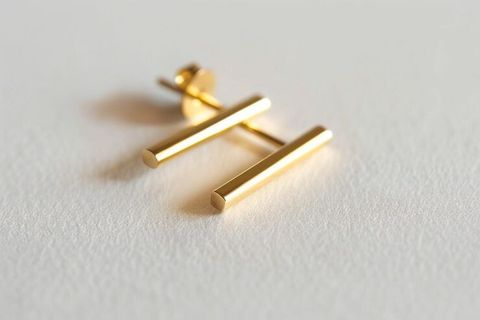
Discover Bar Stud Earrings: A Guide to Minimalist Jewelry and Timeless Style
Updated: October 28, 2026
Read More