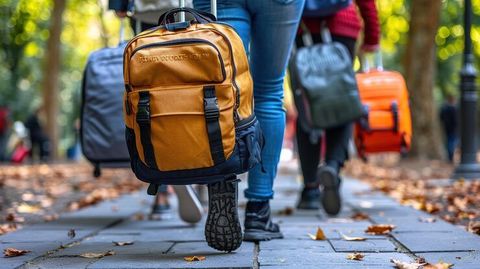
Tips for Finding Durable Travel Backpacks With Comfort for Extended Journeys
Travel backpacks are designed to carry clothing, electronics, personal belongings, and travel essentials during journeys that may last several days, weeks, or months. Unlike ordinary daypacks, backpacks intended for extended travel often include larger compartments, adjustable suspension systems, padded laptop sections, and organizational pockets.
Choosing the right backpack involves more than selecting a particular capacity or appearance. Travelers need to consider comfort, weight distribution, material durability, weather resistance, and airline baggage restrictions. A backpack that works well for a weekend getaway may not provide sufficient support or organization for a month-long international journey.
Common Types of Travel Backpacks
Different backpack designs suit different travel styles.
Carry-on travel backpacks: Usually designed to fit within airline cabin baggage dimensions, although individual restrictions vary.
Travel backpacks with hip belts: Transfer some of the load from the shoulders to the hips, helping distribute weight during longer walks.
Trekking backpacks: Designed for outdoor journeys, with supportive frames, adjustable harnesses, and attachment points for equipment.
Convertible travel backpacks: Include handles or shoulder straps that allow the bag to be carried in different ways.
Laptop travel backpacks: Provide padded compartments for computers, chargers, documents, and other electronic equipment.
Expandable travel backpacks: Include sections that increase storage capacity, potentially affecting cabin baggage compliance.
Understanding Backpack Capacity
Backpack capacity is generally measured in liters. The appropriate size depends on the trip duration, clothing requirements, climate, and access to laundry facilities.
Backpack capacity | Typical use | Main consideration |
|---|---|---|
15–25 liters | Day trips and personal essentials | Limited clothing storage |
25–35 liters | Short trips and minimalist packing | Careful organization required |
35–45 liters | Extended travel with compact packing | May approach cabin baggage limits |
45–60 liters | Longer journeys and varied clothing needs | Often requires checked baggage |
60 liters or more | Trekking and equipment-intensive travel | Greater weight and handling demands |
These ranges are general guidelines, not universal standards. External pockets, frames, and protruding straps can affect the backpack's actual dimensions.
Why Backpack Comfort and Durability Matter
Long-distance travel often involves walking through airports, changing trains, navigating crowded streets, and carrying belongings between accommodations. A poorly fitted backpack can create pressure on the shoulders, back, and hips. Excessive weight may also increase fatigue and make movement more difficult.
Comfort becomes especially important for travelers visiting several destinations without a fixed vehicle or permanent base. Students studying abroad, digital nomads, backpackers, and families moving between destinations may all benefit from practical packing systems.
Ergonomic Design and Weight Distribution
Ergonomic backpack design focuses on how weight is distributed across the body. Important features include:
Adjustable shoulder straps: Help position the backpack correctly against the body.
Padded hip belts: Transfer part of the load toward the hips when properly fitted.
Sternum straps: Help stabilize shoulder straps during movement.
Padded back panels: Improve contact comfort and may support airflow.
Load-lifter straps: Help adjust how the upper portion of the backpack sits.
Internal frames: Provide structure and help manage heavier loads in suitable trekking designs.
A backpack should fit the user's torso and body shape. A larger capacity does not automatically mean better comfort, and additional padding cannot compensate for an unsuitable fit or excessive weight.
Materials and Long-Term Durability
Material selection influences abrasion resistance, water resistance, weight, and overall lifespan.
Common backpack materials include nylon, polyester, ripstop fabrics, and coated textiles. Higher-denier fabrics are often thicker, but denier alone does not determine durability. Weave structure, coating quality, stitching, zipper construction, and reinforcement also matter.
Useful durability features include reinforced seams, sturdy zippers, protected base panels, replaceable buckles, and well-constructed attachment points.
Water-resistant fabric can help protect belongings from light rain, but it does not guarantee waterproof performance. Travelers visiting wet regions should consider rain covers or waterproof liners, particularly for electronics and important documents.
Recent Trends in Travel Backpacks
Travel backpack design continues to evolve as travelers look for lightweight construction, flexible storage, and practical organization. Developments during 2025 and 2026 reflect growing interest in minimalist packing, durable fabrics, and bags that can accommodate both travel essentials and work equipment.
Lightweight Designs and Sustainable Materials
Lightweight backpacks help travelers manage their total luggage weight, particularly when airlines impose strict cabin baggage limits. Recycled polyester and recycled nylon are also used in some backpack designs to incorporate recovered materials into textile production.
However, recycled materials do not automatically guarantee greater durability or a lower environmental impact. Manufacturing methods, fabric treatments, repairability, and product lifespan also matter.
Carry-On Compatibility and Flexible Storage
Travelers increasingly consider cabin-compatible backpacks for journeys involving multiple flights and destinations. Expandable compartments, removable organizers, laptop sleeves, and separate clothing sections can make packing more adaptable.
A backpack described as cabin-sized may still exceed an airline's limits when fully packed. Travelers should measure the complete bag, including handles, straps, and external pockets.
Travel Backpacks for Work and Leisure
Hybrid travel has increased interest in backpacks that accommodate clothing, laptops, chargers, and travel documents in one organized design. Features such as concealed pockets, luggage pass-through straps, and padded electronic compartments can support this combination.
Practical design remains important. Extra compartments and technology features may add weight, so travelers should choose features that match their actual needs.
Airline Carry-On Rules and Travel Policies
Carry-on baggage rules vary by airline, ticket type, aircraft, and travel route. There is no single worldwide backpack dimension that guarantees cabin acceptance.
Understanding Cabin Baggage Dimensions
Many airlines use measurements around 55–56 cm in height for standard cabin bags, but permitted width, depth, and weight differ. Some airlines also distinguish between a main cabin bag and a smaller personal item that must fit beneath the seat.
For example, Indian airlines commonly publish specific cabin baggage limits. Air India generally specifies dimensions of 55 × 40 × 20 cm for applicable cabin baggage, while IndiGo specifies 55 × 35 × 25 cm. Weight allowances and other conditions should be checked for the specific flight.
Before departure, travelers should:
Check the operating airline's current baggage policy.
Measure the backpack when fully packed.
Confirm whether a laptop bag counts as a separate cabin item.
Check restrictions for batteries, power banks, liquids, and sharp objects.
Review baggage conditions for every airline on a connecting itinerary.
In India, airport security requirements and airline baggage policies both affect what passengers can carry. International travelers may also encounter customs requirements when entering another country.
International Baggage and Security Considerations
The International Air Transport Association provides industry guidance on baggage handling, but individual airlines determine their applicable baggage allowances. Airport security authorities establish additional restrictions for certain items.
Travelers carrying power banks or spare lithium batteries should check the relevant airline and aviation authority requirements. Such batteries generally need to be carried in cabin baggage, subject to applicable capacity and quantity limits.
Tools and Resources for Choosing a Travel Backpack
A few simple tools can help travelers compare backpack designs and prepare for longer journeys.
Backpack Selection Checklist
Before selecting a backpack, consider the following factors:
Trip duration and expected clothing requirements.
Empty backpack weight and maximum packed weight.
Torso length, shoulder strap adjustment, and hip belt fit.
Main compartment capacity and pocket arrangement.
Fabric durability, stitching, zippers, and weather resistance.
Laptop compartment dimensions, if needed.
Cabin baggage measurements for planned flights.
Warranty terms, repair options, and replacement components.
Useful Planning Tools
Digital luggage scale: Measures packed weight before reaching the airport.
Measuring tape: Checks backpack dimensions against airline requirements.
Packing checklist: Helps prevent unnecessary items from increasing luggage weight.
Packing cube planner: Organizes clothing by category and makes belongings easier to locate.
Trip itinerary planner: Helps estimate clothing and equipment requirements for different climates and activities.
Backpack fitting guide: Helps assess torso length, strap positioning, and hip belt adjustment.
These tools are useful for comparing travel backpack specifications and identifying potential baggage issues before departure.
Frequently Asked Questions
What is the best backpack size for long trips?
A backpack between 35 and 45 liters may suit travelers who pack efficiently and want to minimize luggage. Longer trips involving varied climates or specialist equipment may require a larger backpack. The right capacity depends on packing habits and airline restrictions.
Are travel backpacks better than suitcases?
Travel backpacks can be more practical on uneven streets, stairs, and journeys involving frequent transfers. Suitcases may be more convenient for heavier loads on smooth surfaces. The preferred option depends on mobility, trip activities, and personal comfort.
How can I check whether a backpack meets carry-on requirements?
Measure its height, width, and depth when packed, including external pockets and straps where applicable. Compare these measurements and the total weight with the operating airline's current rules. An advertised carry-on label does not guarantee acceptance on every flight.
Which materials are suitable for a durable travel backpack?
Nylon, polyester, and ripstop fabrics are commonly used. Durability also depends on fabric construction, stitching, zippers, reinforced panels, and protective coatings. Travelers visiting wet destinations should consider additional rain protection.
How heavy should a backpack be for comfortable travel?
There is no single weight limit that suits every traveler. Comfort depends on body size, physical condition, backpack fit, and walking distance. Packing only necessary items, distributing weight evenly, and testing the loaded backpack before departure can help reduce strain.
Conclusion
The best travel backpack for a long trip balances capacity, ergonomic comfort, durability, and practical organization. Travelers should evaluate their itinerary, packing requirements, preferred carrying style, and airline baggage restrictions before choosing a suitable design.
Lightweight fabrics, adjustable suspension systems, organized compartments, and reliable construction can improve the travel experience. Careful measurement and advance baggage planning also help prevent unexpected problems at airports.
Ultimately, a well-fitted backpack with the right capacity and essential features can support a more comfortable, organized, and flexible journey.

Related Post...


Guide to 5-Star Resort Escapes for Unforgettable Luxury Travel Experiences
Updated: October 28, 2026
Read More
Sharm El Sheikh Hotels for Gulf Travelers: Your Guide to a Seamless Red Sea Stay
Updated: October 27, 2026
Read More