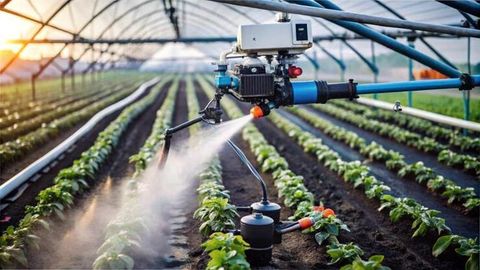
Explore Smart Irrigation System Setup for Gardens, Farms, and Modern Landscapes
Smart irrigation systems combine automated watering equipment, sensors, controllers, and weather information to manage water delivery more efficiently. These systems are used in residential gardens, agricultural fields, greenhouses, commercial landscapes, and public parks. Unlike traditional irrigation methods that operate on fixed schedules, smart systems can adjust watering according to soil moisture, rainfall, temperature, and plant requirements.
Understanding smart irrigation system setup helps property owners, farmers, landscape managers, and agricultural professionals choose suitable equipment and develop practical watering schedules. A well-planned system can support healthy plant growth, reduce unnecessary water use, and improve irrigation management.
Understanding Smart Irrigation Technology
A smart irrigation system uses electronic controls and monitoring devices to determine when and how much water plants need. Depending on the design, it may operate through drip irrigation lines, sprinklers, micro-sprayers, or other water distribution equipment.
Common components include:
Smart irrigation controller: Manages watering schedules and operating times.
Soil moisture sensors: Measure the moisture level in the root zone.
Weather sensors: Monitor rainfall, temperature, or other environmental conditions.
Flow meters: Measure the volume of water passing through a pipe.
Valves and pipes: Control and distribute water to different irrigation zones.
Mobile monitoring applications: Allow users to review system status and adjust settings remotely.
These components work together to make irrigation more responsive to changing environmental conditions. However, the effectiveness of a system depends on correct installation, reliable sensor readings, suitable equipment, and regular maintenance.
Why Smart Irrigation System Setup Matters
Water availability, changing weather patterns, and the need for reliable crop production have increased interest in precision irrigation technology. Traditional watering schedules may continue during rainfall or deliver more water than plants can absorb. Smart irrigation helps address these issues by matching water application more closely to actual conditions.
The technology can benefit several groups:
Farmers: Improve irrigation scheduling across different crops and soil types.
Homeowners: Maintain lawns, gardens, and ornamental plants with more controlled watering.
Greenhouse operators: Manage moisture conditions in protected growing environments.
Landscape managers: Coordinate watering across large properties and multiple irrigation zones.
Water management authorities: Monitor water distribution and encourage efficient resource use.
Smart irrigation is particularly relevant in areas experiencing seasonal drought, groundwater pressure, or irregular rainfall. However, results depend on local conditions, system design, and appropriate maintenance. Automated irrigation does not automatically guarantee lower water consumption if the settings are incorrect.
Choosing the Right Smart Irrigation System
Selecting the appropriate irrigation method is an important part of installation. The choice depends on the size of the growing area, plant spacing, soil characteristics, water pressure, and available water supply.
Irrigation method | Typical application | Main consideration |
|---|---|---|
Drip irrigation | Vegetable beds, orchards, and row crops | Delivers water near plant roots |
Smart sprinkler system | Lawns, parks, and larger gardens | Requires suitable pressure and spray coverage |
Micro-sprinkler irrigation | Orchards and selected horticultural crops | Covers a limited area around plants |
Greenhouse irrigation | Protected crops and nursery plants | Needs precise scheduling and moisture monitoring |
Subsurface drip irrigation | Selected agricultural fields | Requires careful installation and clogging control |
Drip irrigation is often suitable for crops planted in rows because water can be delivered close to the root zone. Sprinklers are useful where broader coverage is required, although wind and evaporation can affect performance.
Before selecting equipment, evaluate the water source, filtration requirements, pipe capacity, and the number of irrigation zones. A system should distribute water evenly without exceeding the supply's available flow rate.
Planning and Installing an Automated Irrigation System
A structured installation process helps prevent uneven watering, pressure problems, and unnecessary water use.
Assess the site and soil
Begin by measuring the area and identifying the plants or crops that require irrigation. Examine soil texture, slope, drainage, sun exposure, and existing water infrastructure.
Sandy soils generally drain more quickly than clay-rich soils, while compacted areas may absorb water slowly. These differences influence how long each irrigation zone should operate.
Divide the area into irrigation zones
Group plants with similar water requirements into separate zones. For example, lawn areas, vegetable beds, and drought-tolerant plants may need different watering schedules.
Zoning allows a controller to manage each area independently. It also helps avoid applying the same amount of water to plants with different moisture requirements.
Install pipes, valves, and emitters
Lay out the irrigation network according to the system design. Install appropriate pipes, valves, filters, pressure regulators, drip lines, or sprinkler heads.
For agricultural systems, filtration is particularly important when using drip emitters because small openings can become blocked by sediment or mineral deposits. Check connections for leaks before covering underground pipes.
Connect sensors and the controller
Install soil moisture sensors in representative root-zone locations. Position weather sensors according to their operating requirements and connect them to a compatible controller.
If the system uses Wi-Fi or another communication network, confirm that the signal reaches the controller location. For farms with limited connectivity, standalone controllers may be more practical.
Configure the watering schedule
Set the operating days, start times, and maximum watering duration. Use local weather conditions, crop requirements, soil type, and sensor readings to adjust the schedule.
Early-morning irrigation is often practical because it can reduce evaporation compared with watering during hot periods. However, crop-specific requirements and local conditions should guide the final schedule.
Test and calibrate the system
Run each zone and inspect its coverage. Check for leaking connections, blocked emitters, uneven sprinkler patterns, and excessive runoff.
Compare sensor readings with actual soil conditions. Adjust watering duration and sensor thresholds where necessary, then review performance over several irrigation cycles.
Smart Irrigation Monitoring and Performance
Monitoring helps determine whether an automated irrigation system is operating as intended. Useful indicators include water consumption, soil moisture, irrigation duration, pressure, and plant condition.
The following table provides illustrative monitoring targets rather than universal agricultural standards.
Indicator | What to monitor | Practical response |
|---|---|---|
Soil moisture | Moisture in the active root zone | Adjust watering thresholds |
Water flow | Volume delivered during each cycle | Investigate unusual changes |
System pressure | Pressure at operating points | Check filters, valves, and leaks |
Rainfall | Recent and forecast precipitation | Delay watering when appropriate |
Plant condition | Growth, wilting, or waterlogging | Review irrigation settings |
Illustrative monitoring framework. Appropriate readings and thresholds vary by crop, soil, equipment, and climate.
A controller's schedule should be reviewed as seasons change. Newly planted crops, mature trees, and established lawns have different water requirements. Sensor placement also matters: a reading from unusually wet or dry soil may not represent the whole field.
Recent Updates in Smart Irrigation Technology
Developments during 2025 and 2026 have placed greater emphasis on connecting irrigation equipment with real-time environmental data, predictive analytics, and digital water management.
Research published on 19 November 2025 examined how Internet of Things (IoT) technology, soil moisture sensors, and automated controls can support more responsive drip irrigation. These approaches help move irrigation management beyond fixed schedules toward decisions based on changing field conditions.
In May 2026, the Indian Council of Agricultural Research reported the inauguration of an IoT-enabled soil monitoring system at its Research Complex for the Eastern Region in Patna. The initiative addressed challenges such as irregular rainfall, declining groundwater levels, and limited access to real-time soil moisture information.
Important technology trends include:
AI-powered irrigation scheduling: Machine learning models can analyse historical weather, sensor readings, and soil conditions to estimate water requirements.
Remote monitoring: Connected controllers help users review irrigation activity without visiting every field or zone.
Integrated weather forecasting: Weather information can support decisions about delaying irrigation when rain is expected.
Smart water meters: Flow and pressure monitoring can help identify unusual consumption and possible equipment problems.
Solar-powered monitoring: Solar energy can support sensors and controllers in locations with limited electrical infrastructure.
These technologies are developing at different rates, and their performance varies by application. Predictive systems still require reliable data, appropriate calibration, and field testing before their recommendations can be trusted.
Laws, Policies, and Government Programs
Smart irrigation systems may be affected by local water-use rules, agricultural regulations, groundwater restrictions, electrical safety requirements, and environmental standards. The applicable requirements depend on the country, region, water source, and intended use.
In India, several public initiatives support irrigation efficiency and improved water management.
Pradhan Mantri Krishi Sinchayee Yojana (PMKSY) promotes irrigation access, improved water-use efficiency, and water conservation. Its components support irrigation infrastructure and modern water management practices.
Per Drop More Crop (PDMC) promotes micro-irrigation, particularly drip and sprinkler systems, to improve water-use efficiency at farm level. Government information published in March 2025 described assistance for eligible farmers, with the applicable support depending on the farmer category and scheme conditions.
Modernization of Command Area Development and Water Management (M-CADWM) was approved in April 2025 as a PMKSY sub-scheme. It incorporates pressurised irrigation infrastructure and technologies such as Supervisory Control and Data Acquisition (SCADA) and IoT for water accounting and management. In March 2026, the government reported sanctioned clusters across 23 states and union territories.
Before installing an agricultural irrigation system, users should check:
State-level groundwater extraction and borewell requirements.
Local rules for drawing water from canals, rivers, or shared sources.
Electrical and equipment safety requirements.
Applicable agricultural scheme eligibility and documentation.
Environmental requirements for drainage and water discharge.
Government programs and eligibility rules can change. Confirm current requirements with the relevant agricultural department or water authority before making installation decisions.
Tools and Resources for Smart Irrigation Planning
Several categories of digital tools can help with irrigation system design, monitoring, and maintenance.
Tool or resource | Main purpose |
|---|---|
Local weather applications | Review rainfall forecasts and temperature |
Soil moisture meters | Measure moisture in the root zone |
Irrigation scheduling calculators | Estimate irrigation duration and water demand |
Flow meters and pressure gauges | Check water delivery and system performance |
Controller applications | Manage schedules and review alerts |
Soil testing resources | Understand texture, drainage, and water-holding capacity |
Government agriculture portals | Review irrigation guidelines and program eligibility |
Satellite and remote-sensing platforms | Examine crop conditions and field variability |
For irrigation duration, a simple calculation can provide an initial estimate.
For example, a zone that requires 600 litres of water and delivers 200 litres per hour would need three hours of operation to deliver that volume under the assumed flow rate. Actual runtime may need adjustment for distribution uniformity, soil infiltration, and system pressure.
Useful planning records include a zone map, equipment inventory, sensor calibration log, weekly water-use record, and seasonal irrigation schedule. These documents help users identify changes in performance and plan maintenance.
Frequently Asked Questions
What is a smart irrigation system?
A smart irrigation system uses automated controllers, sensors, and environmental information to manage watering. Depending on its design, it can adjust irrigation according to soil moisture, rainfall, or programmed crop requirements.
How do soil moisture sensors improve irrigation management?
Soil moisture sensors measure water availability in the soil. Their readings can help determine when irrigation is needed and reduce unnecessary watering, provided the sensors are installed correctly and calibrated for local soil conditions.
Is smart irrigation suitable for small gardens?
Yes. Small gardens can use automated timers, soil moisture sensors, drip lines, and weather-responsive controllers. A simple system may be sufficient when the growing area is small and plant water requirements are similar.
Can smart irrigation operate without an internet connection?
Yes. Some controllers use local sensors and programmed schedules without requiring continuous internet access. Remote monitoring, cloud-based analytics, and weather updates may require connectivity, depending on the equipment.
How often should a smart irrigation system be maintained?
Inspect the system regularly during the irrigation season. Check filters, valves, pipes, emitters, sensor readings, and controller settings. More frequent checks may be necessary where water contains sediment or mineral deposits, or where equipment operates under demanding conditions.
Conclusion
Smart irrigation system setup combines appropriate irrigation equipment, sensor technology, automated controls, and informed scheduling to manage water more precisely. Successful implementation begins with understanding the site, choosing a suitable watering method, dividing the area into zones, and testing the complete system.
Developments in IoT monitoring, artificial intelligence, weather-based scheduling, and digital water management are expanding the possibilities for precision irrigation. However, technology alone cannot guarantee water savings or improved plant growth. Reliable data, suitable installation, regular maintenance, and compliance with local water regulations remain essential.
By evaluating actual soil moisture, plant needs, water availability, and system performance, farmers, homeowners, and landscape managers can make more informed irrigation decisions and support responsible water management.

Related Post...

Explore Vehicle Interior Customization Ideas for Comfort, Style, and Modern Driving
Updated: October 26, 2026
Read More
Tips for Understanding Industrial Plant Efficiency Audits and Energy Use
Updated: October 26, 2026
Read More
Discover Data Model Optimization Methods for Enhanced Reporting and Data Management
Updated: October 26, 2026
Read More